Storm Damage in Charlottesville, IN
Emergency tarp and board up plus full structural drying for Charlottesville homeowners, with a crew dispatched within 2 hours.
Storm Damage in Charlottesville, IN starts with one call to Charlottesville Water Restoration: live 24/7 dispatch, IICRC certified response, and honest written scopes before work begins. Call (317) 653-6821.
- Service: Storm Damage for Charlottesville homeowners
- Service area: Charlottesville, IN and surrounding areas
- Response time: Emergency water calls in Charlottesville get crews rolling, not callbacks
- Licensed and insured (License #RC21100059)
- Serving Charlottesville, IN since 2018
Storm Damage Cleanup in Charlottesville
After a storm in Charlottesville, we'll cover the opening first and then dry out what got wet.
Where Storm Water Ends Up
With full basements common here, a big storm can bring water in from below as well as through the roof. That makes it a basement flooding job too.
After a storm we can be anywhere in Charlottesville, from Ripley Township Rural Parcels to the roads around Charlottesville Worship Center and Eastern Hancock Elementary School. We also handle storm damage in Knightstown, Greenfield, Henry and Fortville.
Expert Storm Damage for Charlottesville Homeowners
Rain driven sideways against a window can leave almost nothing to see, only a damp line along the sill or a darker patch of carpet at the wall. Behind the trim, the water has already dropped into the cavity and started wicking into the drywall. Charlottesville Water Restoration reads the walls under windows on storm calls in Charlottesville and dries the cavity before the paint begins to bubble.
The IICRC S500 sorts water into three categories by contamination level, and water can move into a worse category the longer it sits. Charlottesville Water Restoration assesses the source and what the water touched on the first visit in Charlottesville, then rechecks as the job runs, so the plan matches the water in the house today.
Windows and doors that took wind driven rain get a closer look at the wall base. Baseboard and casing come off in the wet zone, and small holes go in so a camera or probe can see the cavity behind. If the bottom plate and the insulation read wet, ports are cut for drying. If they read dry, the trim goes back on.
Storm damage that sat for a while raises questions, so the file gets built to answer them. Charlottesville Water Restoration documents the condition of the materials as found in your Charlottesville home, notes where newer damage has already started and photographs both. You decide with your insurance company what that record means, and the photos make it clearer than anybody's memory would.
Calls from Charlottesville come in at every hour during storm season, and Charlottesville Water Restoration answers them day and night. Tell us where you see water and whether the power is on, and we'll talk you through what to do before the crew starts.
Signs You Need Storm Damage Restoration
If you notice any of these in your Charlottesville home, schedule a free inspection before the issue worsens.
Water stains running down a stairwell wall from the upper floor
Silt left on the garage floor or mudroom tile after runoff pushed in
Clothes or boxes against an outside wall that feel damp after wind driven rain
Basement floor drain gurgling or bubbling during a heavy downpour
Mud film on a basement floor once the water has drained away
Shingles lifted, curled, or missing where you can see the roof from the ground
Dark staining or rusted nail points on the underside of attic sheathing and rafters
Ceiling texture cracked in a straight line that follows a joist or a roof truss
A soft or discolored patch of drywall around a skylight, a chimney chase, or a bath vent
Shingle granules piled in the gutters or washed out at the bottom of a downspout
How Charlottesville Water Restoration Handles Storm Damage
We follow these steps in order on every Charlottesville job.
Power and Safety Check
The crew looks for water near outlets and light fixtures and keeps affected circuits off. Sagging ceilings and slick floors get marked before anyone starts work, and wet electrical gear gets flagged for an electrician.
Moisture Mapping
Thermal imaging and penetrating meters cover every room under and beside the intrusion, plus baseline readings in unaffected areas of the same house. The map shows how far water tracked through framing and insulation, and it's what decides which surfaces get opened.
Attic and Cavity Drying
Air movers aim at wet surfaces, dehumidification is sized to the containment volume, and negative air cavity drying runs through small ports where a ceiling or wall doesn't have to come down to dry. Humidity gets tracked inside and outside the drying area.
Clearance Verification
Final moisture readings are taken on every affected material at the same marked locations and compared against the unaffected baseline recorded at the start. Equipment comes out once that comparison's documented, containment follows, and the verification sheet goes into your file.
Final Walkthrough
Once the clearance readings are documented, the equipment comes out and the technician walks the rooms with you. The removed materials and the photo file get reviewed together so you know what repairs come next.
Storm Damage in Charlottesville
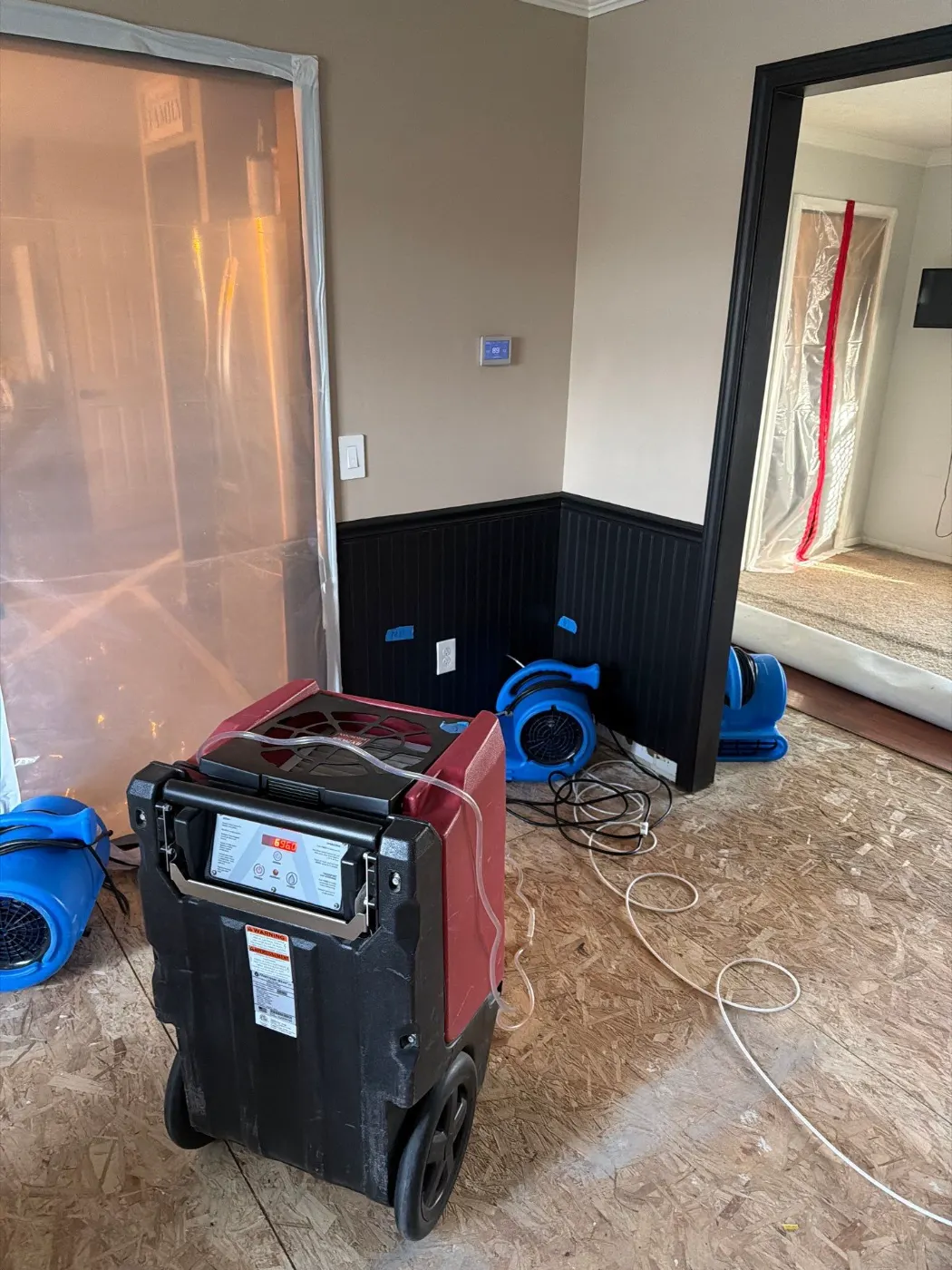
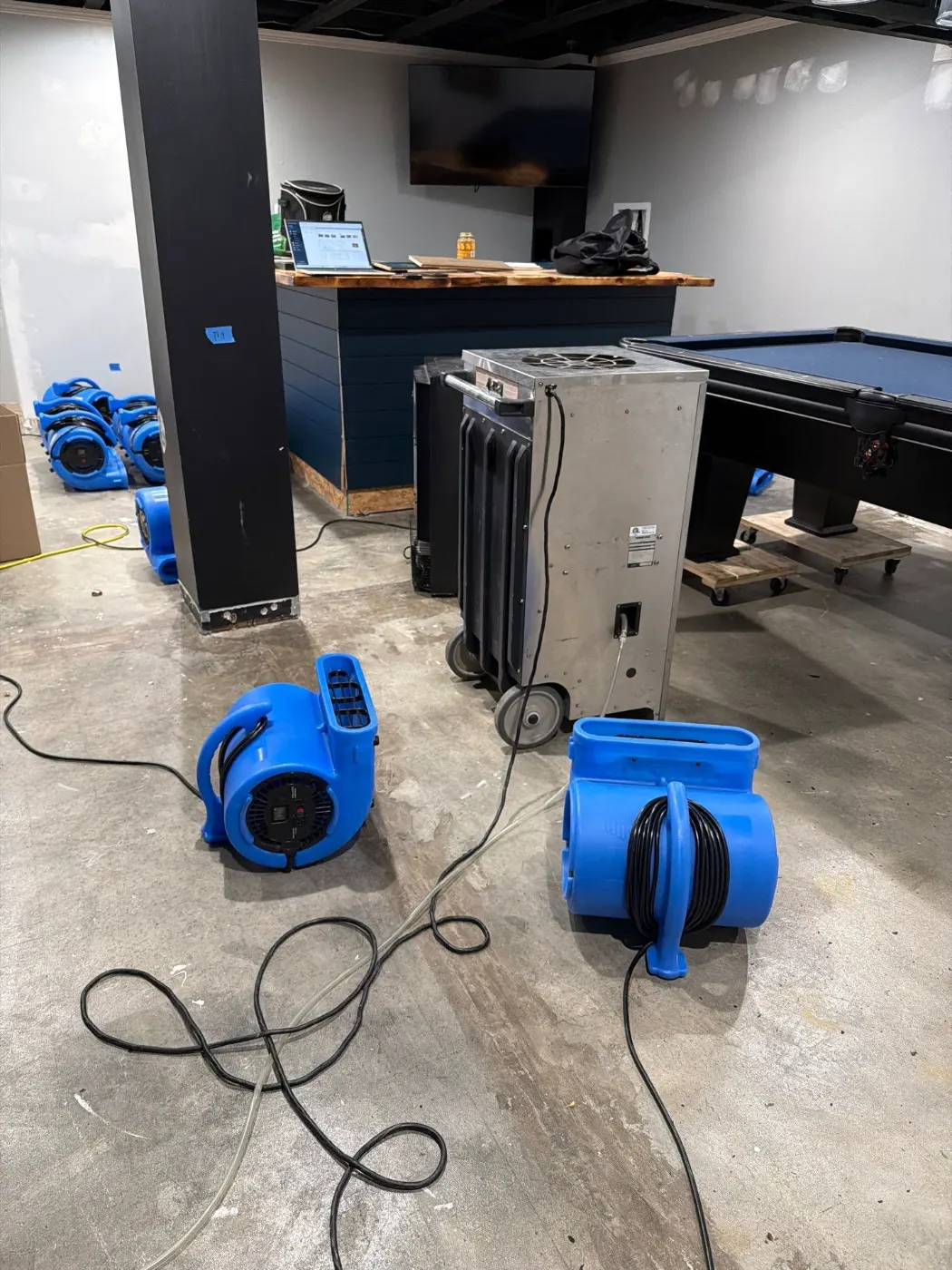
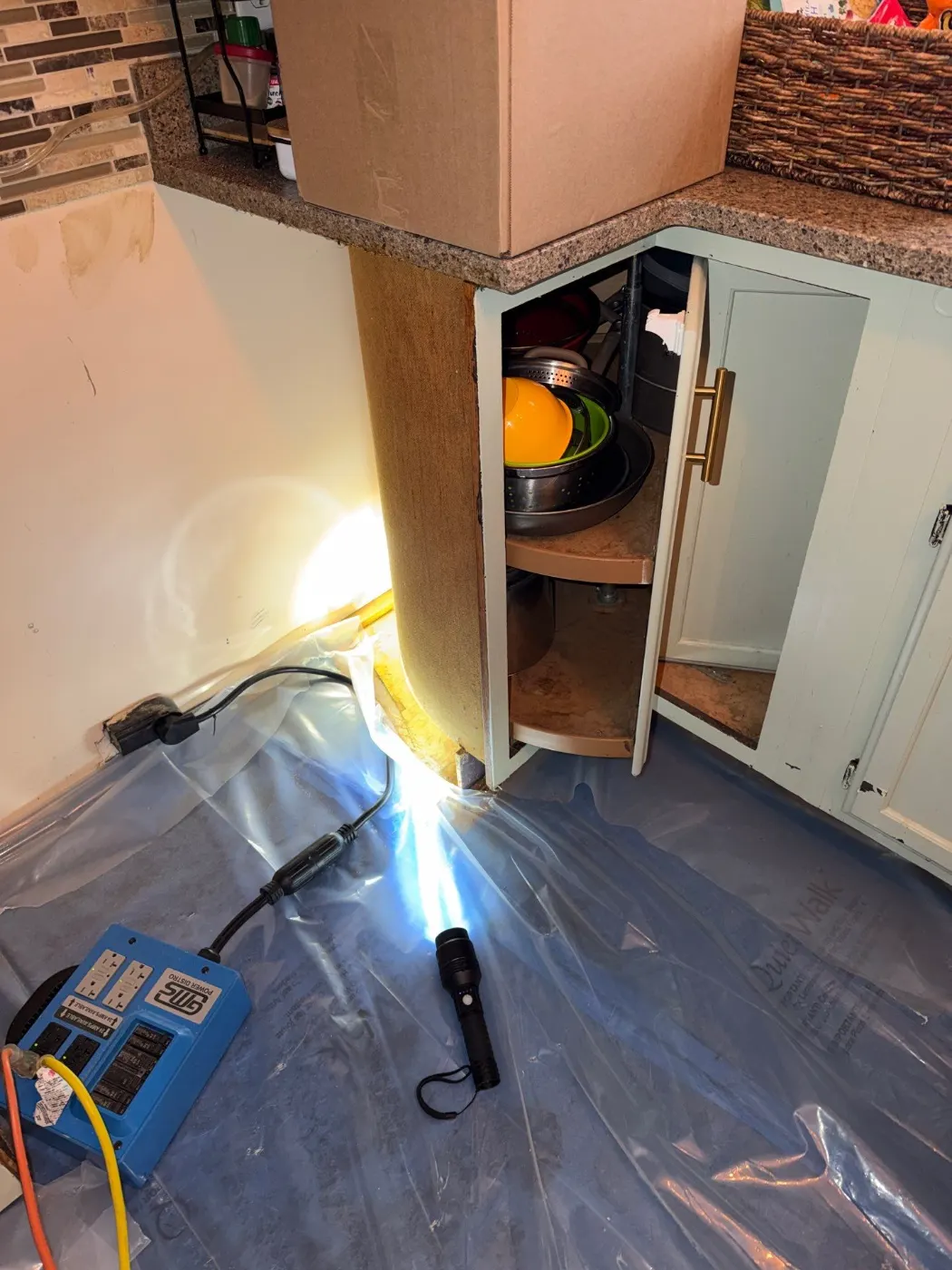
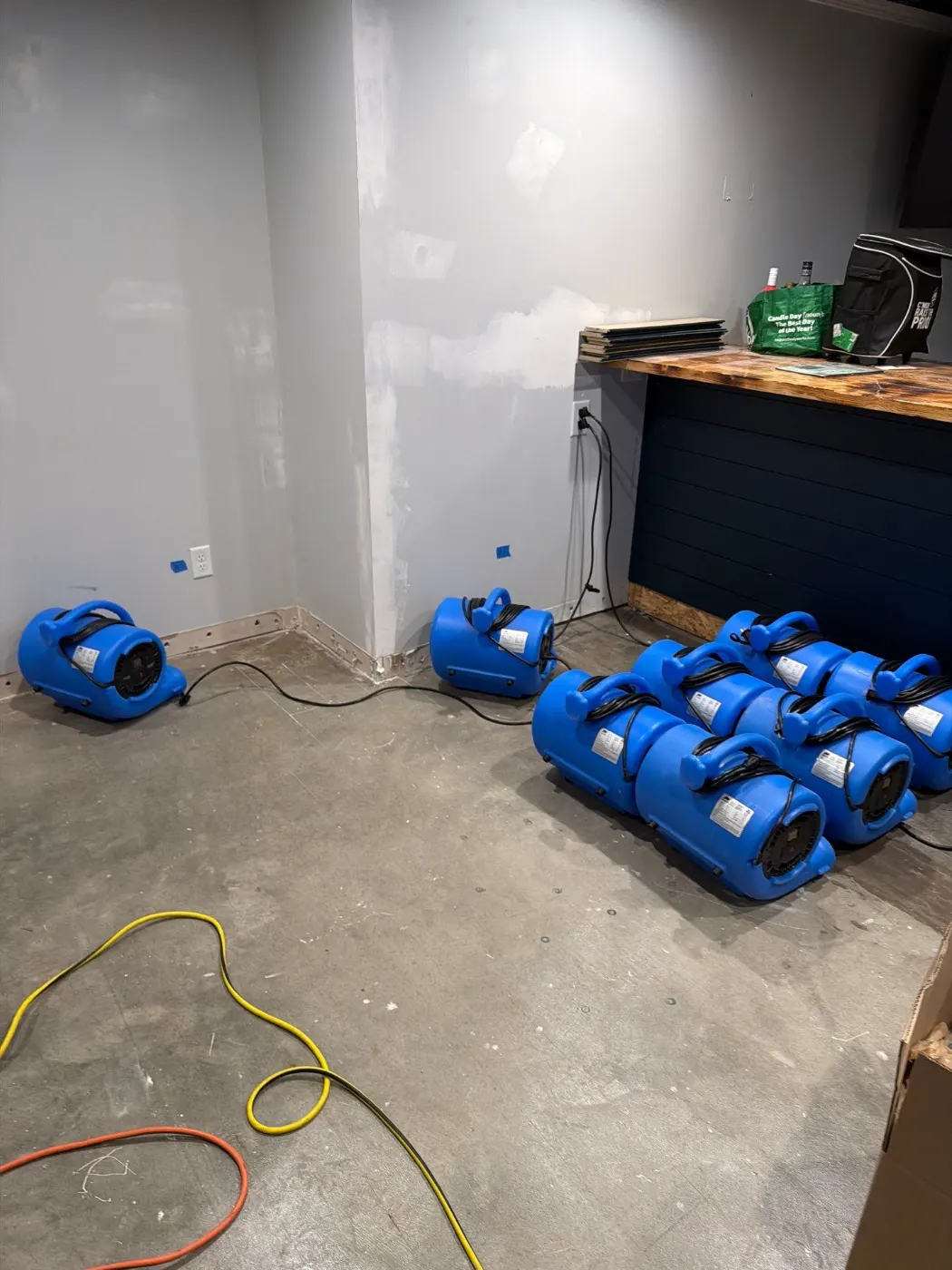
Photographs from real storm damage jobs completed by our crew in Charlottesville and surrounding areas.
Storm Damage FAQ
Questions Charlottesville homeowners ask us about storm damage restoration.
Guidance and Standards for Storm Damage
- The National Weather Service office in Indianapolis posts summaries of recent central Indiana storm and flood events. NWS Indianapolis Event Summaries
- The Indiana Department of Insurance advises against permanent repairs before your insurance company inspects the damage. Check your own policy for what it covers. Indiana Department of Insurance: Insurance Claim Tips
Charlottesville Neighborhoods We Serve
We take storm damage calls in every part of Charlottesville. Pick your neighborhood for local details.
- Original Platted Village Core (West Street and East Street grid)
- National Road (U.S. Route 40) Corridor
- Jackson Township Rural Parcels (Hancock County side)
- Ripley Township Rural Parcels (Rush County side)
- Eastern Hancock School District Residential Area (East 250 North corridor)
- Henry and Cleveland Vicinity (Jackson Township west edge)
Other Restoration Services in Charlottesville
Charlottesville Water Restoration handles the full scope of restoration work. Explore our other services below.
Water Damage Restoration in Charlottesville
24/7 emergency response. IICRC certified water restoration from extraction to full dry out.
Learn more →Basement Flooding in Charlottesville
Basement water emergencies handled fast. Extraction, drying, mold prevention.
Learn more →Sewage Cleanup in Charlottesville
Category 3 biohazard cleanup. Full containment, decontamination, structural restoration.
Learn more →Request Storm Damage Restoration
Reach Us Directly
Our team is available 24/7 for emergencies and ready to schedule inspections during business hours.
Need Immediate Help?
For active water or mold emergencies, call us directly. We are available 24/7.