Commercial Flood Damage Cleanup in Charlottesville, IN
Waterline photos and daily readings for Charlottesville flood losses, organized for the owner and the flood policy adjuster.
Charlottesville Water Restoration delivers Commercial Flood Damage Cleanup across Charlottesville and surrounding areas with certified crews available 24/7 and every step documented for insurance. Call (317) 653-6821.
- Service: Commercial Flood Damage Cleanup for Charlottesville homeowners
- Service area: Charlottesville, IN and surrounding areas
- Response time: 24/7 live dispatch; emergency crews prioritized for Charlottesville
- Licensed and insured (License #RC21100059)
- Serving Charlottesville, IN since 2018
Commercial Flood Cleanup in Charlottesville
We handle commercial flood cleanup across Charlottesville, and we'll start with the areas your business needs back first.
Flood Exposure Here
Slow draining clay soil can hold floodwater against foundations and lower levels. Your building's own flood exposure gets mapped when we walk the site with your facilities contact.
Our flood crews work commercial sites throughout Charlottesville, including the blocks around Eastern Hancock High School and Charlottesville Friends Church. We also handle commercial flood cleanup in Knightstown, Greenfield, Henry and Fortville.
Commercial Flood Damage Cleanup for Charlottesville Businesses
Once floodwater has soaked carpet, cushion, drywall, insulation and ceiling tile, the question every owner asks is what can stay. The water category and the moisture readings answer it. Charlottesville Water Restoration walks each commercial building in Charlottesville with the property manager or business owner and marks what comes out and why. Every decision gets a photo before anything goes in the dumpster.
Large commercial scopes get read line by line, so Charlottesville Water Restoration writes them with that in mind. The daily record carries enough detail that anyone can trace a single charge back to a reading taken on a specific day in a specific room of your Charlottesville building. Photos by area and phase, equipment hours by room and a contents inventory sit in the same file.
Doors and casework get sorted by what they're made of. Solid wood and metal components that read dry after cleaning can often stay in service, while particleboard and laminate cabinets that swelled in the water usually come out. Each piece is photographed before it moves and marked on a floor plan, and the decision goes in the Charlottesville file.
Flood policies usually treat the building and its contents as separate coverages with separate limits, so the records need the same split. Keep purchase invoices and stock lists for inventory and equipment, and let the pack out inventory for your Charlottesville property match them item by item, since the adjuster sorts what belongs to which coverage.
Call Charlottesville Water Restoration and a commercial crew is on the way to your Charlottesville property with high volume pumping and extraction. The moisture log starts on the day the crew arrives. Every photo and reading goes in a file you keep.
Signs You Need Commercial Flood Damage Cleanup
If you notice any of these in your Charlottesville building, schedule a free inspection before the issue worsens.
Mold spotting on the paper face of drywall behind wall base that was pulled for a look
Sewer smell on the lower level after floodwater came up through the floor drains
Wet insulation hanging out of a wall cavity after floodwater passed through
Parking lot storm drains backing up and pushing water toward the entrances
Standing water in a stairwell or parking level below the building
A dark tide line on drywall or wall base running along a corridor at a consistent height
An adjuster or lender asking for moisture readings and photographs of the flood damage
Standing water in an underground parking level with an oily film on the surface
Foundation wall or slab joint still seeping water days after the rain ended
Condensation forming on interior metal doors and glass partitions that stayed clear before the loss
How Charlottesville Water Restoration Handles Commercial Flood Damage Cleanup
We follow these steps in order on every Charlottesville job.
Source and Contamination Check
The crew records where the water came from and what it crossed, and photographs the entry point. Floodwater and sewer backups get containment with HEPA filtered negative air before anything else, and every load of soaked material that leaves gets documented.
Disposal Records
Every load that leaves the building gets a log entry with the date and the type of material. The disposal receipt and a photo of the load go in the same file, so the removal record matches what was hauled away.
Slab and Concrete Drying
Concrete and masonry hold bound water long after the surface feels dry. In situ relative humidity probes and surface readings taken from the same marked locations daily show what the slab is doing, which is what decides when flooring can go back down over it.
Dehumidification Sizing
Dehumidifier and air mover counts come from the cubic volume of the affected space and the amount of wet material. Refrigerant units handle open floor area, desiccant units pull moisture out of masonry and concrete, and the math gets rechecked as the daily readings move.
Daily Documentation
Moisture readings, temperature and humidity logs, equipment counts by room, and photographs get recorded every day equipment runs. Affected materials get compared against dry standard readings taken elsewhere in the same building, so the file shows a drying trajectory an adjuster can follow.
Commercial Flood Damage Cleanup in Charlottesville
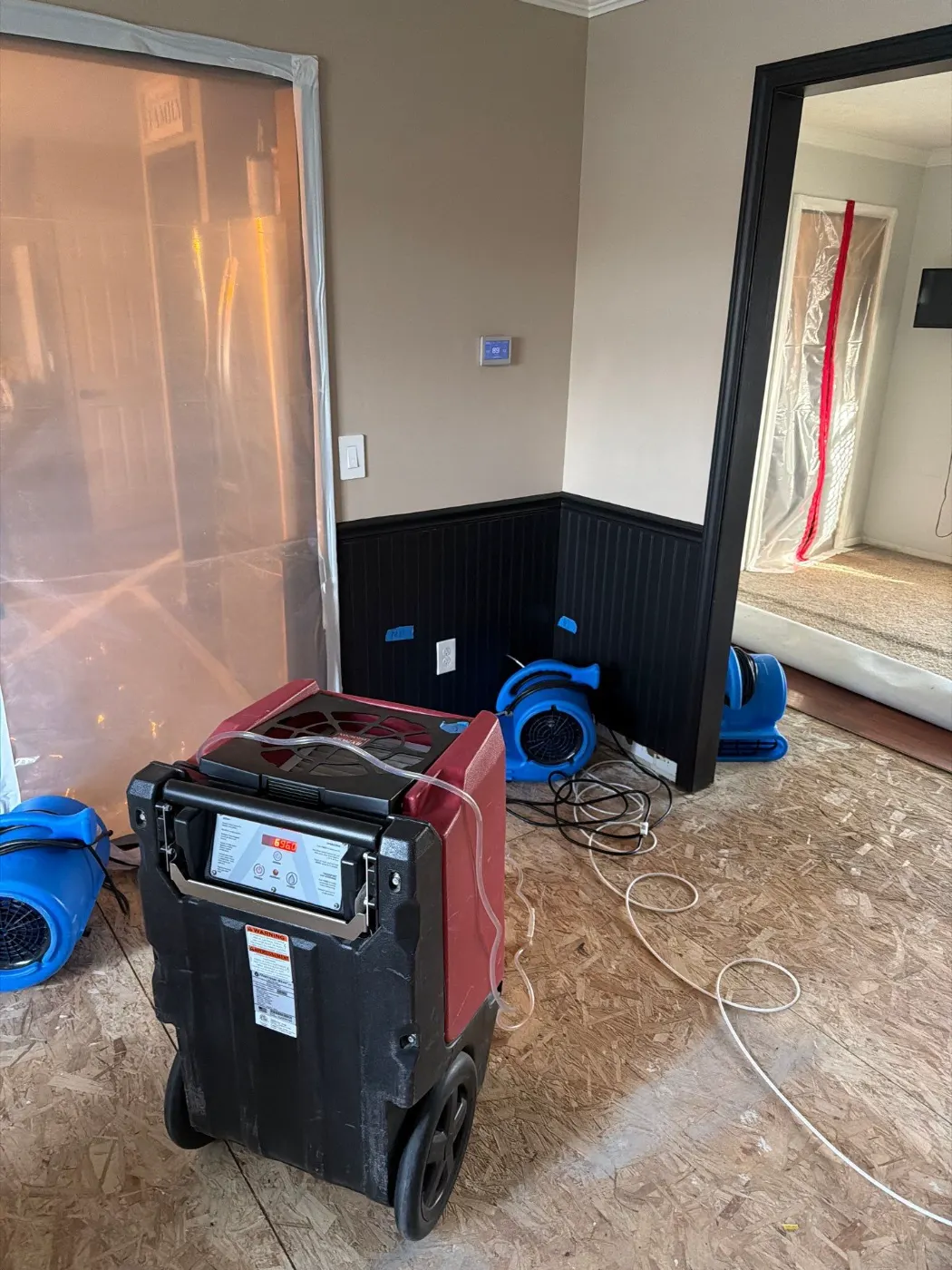
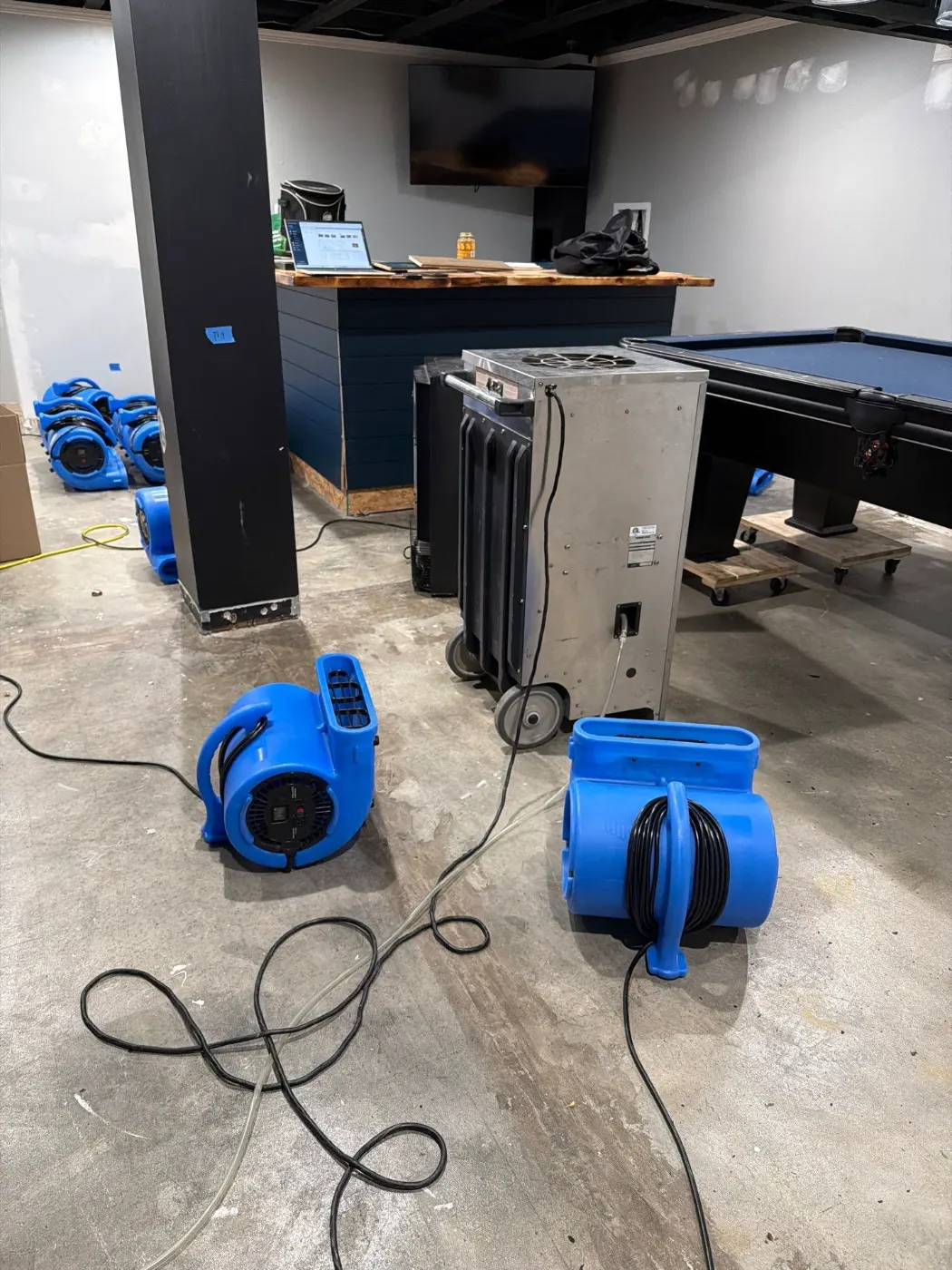
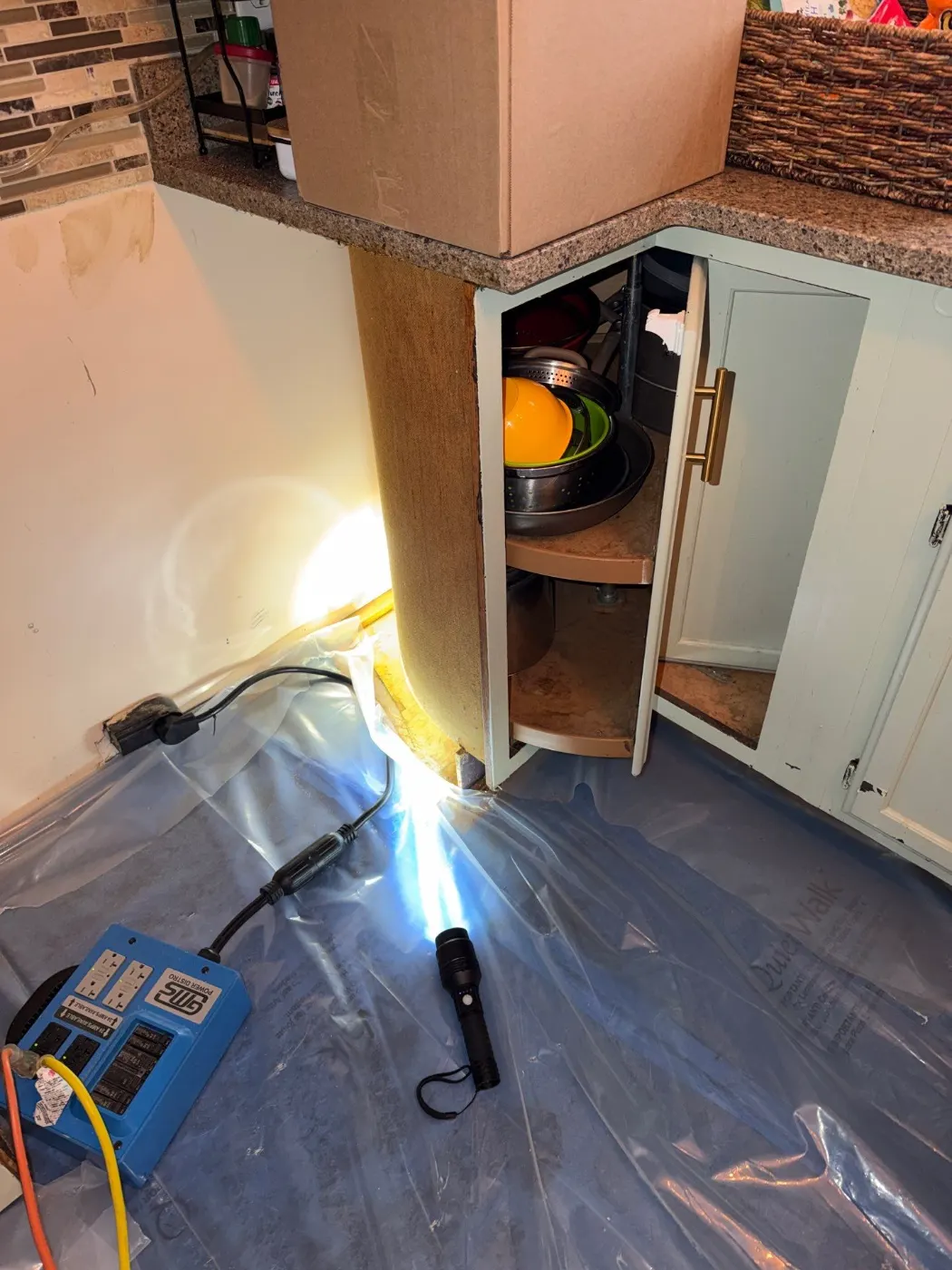
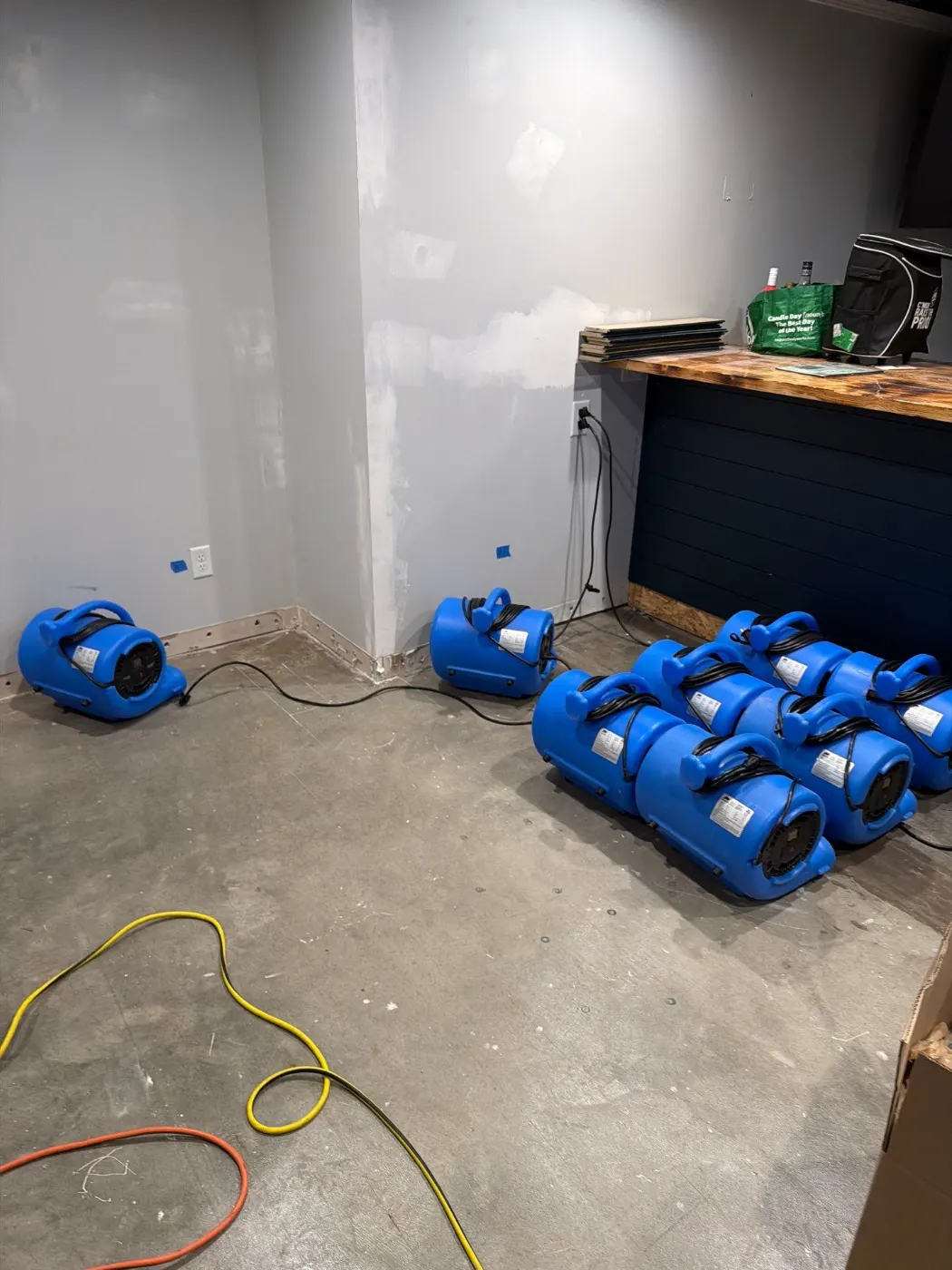
Photographs from real commercial flood damage cleanup jobs completed by our crew in Charlottesville and surrounding areas.
Commercial Flood Damage Cleanup FAQ
Questions Charlottesville property managers ask us about commercial flood damage cleanup.
Guidance and Standards for Commercial Flood Damage Cleanup
- The ANSI/IICRC S500 is the published standard for professional water damage restoration. The current edition is the Fifth Edition, 2021. IICRC S500 Standard
- EPA advises drying water damaged areas and items within 24 to 48 hours to prevent mold growth. EPA: A Brief Guide to Mold, Moisture and Your Home
Charlottesville Neighborhoods We Serve
We take commercial flood damage cleanup calls in every part of Charlottesville. Pick your neighborhood for local details.
- Original Platted Village Core (West Street and East Street grid)
- National Road (U.S. Route 40) Corridor
- Jackson Township Rural Parcels (Hancock County side)
- Ripley Township Rural Parcels (Rush County side)
- Eastern Hancock School District Residential Area (East 250 North corridor)
- Henry and Cleveland Vicinity (Jackson Township west edge)
Other Restoration Services in Charlottesville
Charlottesville Water Restoration handles the full scope of restoration work. Explore our other services below.
Water Damage Restoration in Charlottesville
24/7 emergency response. IICRC certified water restoration from extraction to full dry out.
Learn more →Basement Flooding in Charlottesville
Basement water emergencies handled fast. Extraction, drying, mold prevention.
Learn more →Sewage Cleanup in Charlottesville
Category 3 biohazard cleanup. Full containment, decontamination, structural restoration.
Learn more →Request Commercial Flood Damage Cleanup
Reach Us Directly
Our team is available 24/7 for emergencies and ready to schedule inspections during business hours.
Need Immediate Help?
For active water or mold emergencies, call us directly. We are available 24/7.