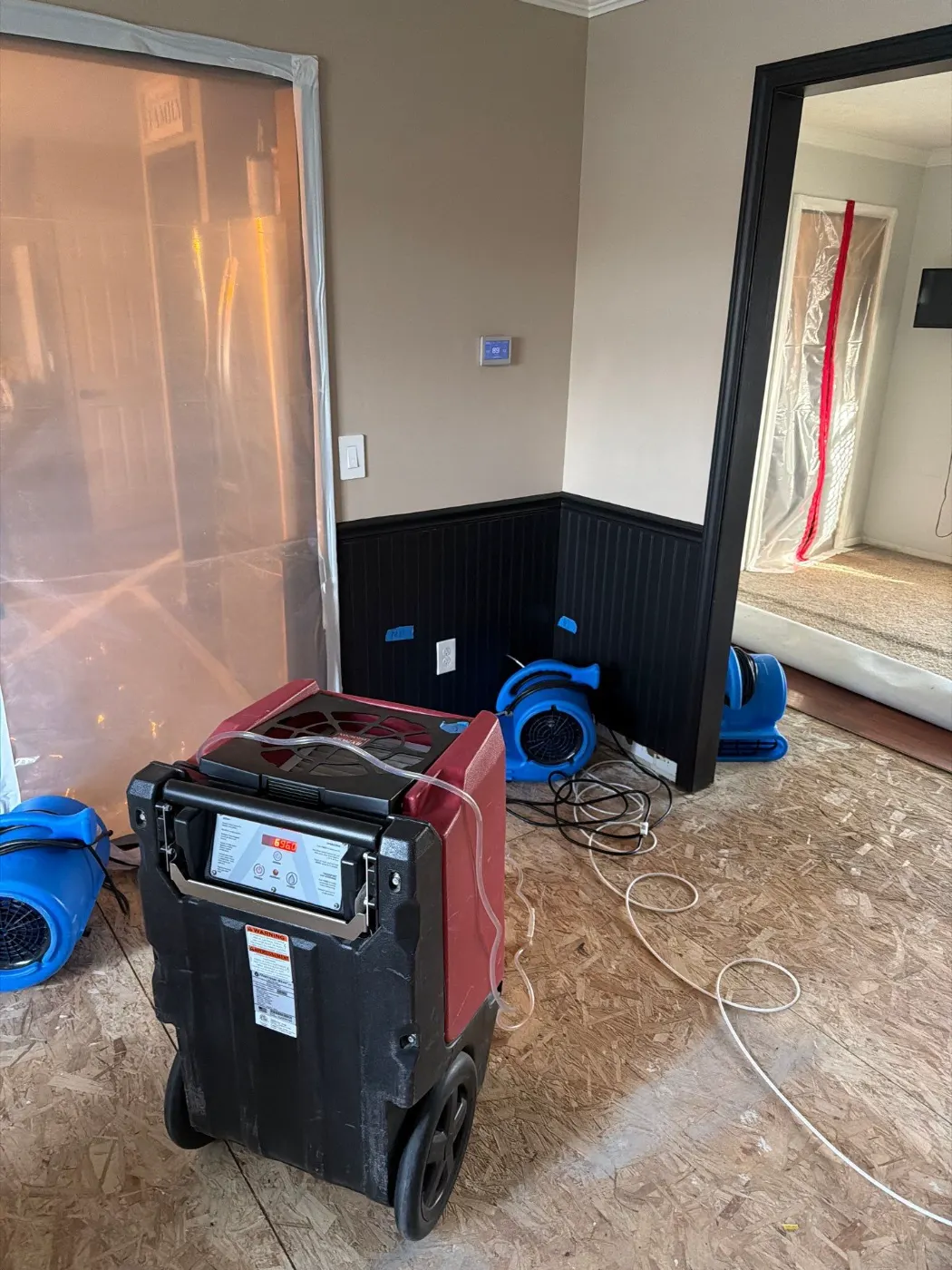
Your Water Damage Crew in Charlottesville
When water is spreading through your Charlottesville home right now, Charlottesville Water Restoration delivers fast, around the clock emergency response across Hancock County. Our IICRC certified crews handle every phase from extraction through reconstruction, and we coordinate directly with your insurance carrier so you can focus on your family.
If your call goes to voicemail, expect a call back from us within 15 minutes.

Charlottesville Water Restoration provides emergency water removal and complete water damage restoration for Charlottesville, IN homeowners: extraction, drying, cleanup, and reconstruction coordination, with 24/7 live dispatch and insurance claim support. Call (317) 653-6821.
- Services: water damage restoration, basement flooding, sewage cleanup, storm damage
- Service area: Charlottesville, Hancock County, IN and surrounding areas
- Response time: Same day for Charlottesville inquiries; 24/7 emergency service available
- Licensed and insured (License #RC21100059)
- Serving Charlottesville, IN since 2018
Schedule Your Free Damage Assessment
The inspection on a Charlottesville home is a full room by room walkthrough, not a quick glance. Walls are measured with non penetrating meters at multiple heights, then confirmed with a penetrating pin meter where readings spike. Baseboards, trim, subfloors, and insulation cavities are checked, cabinets and appliances pulled where needed, and the basement perimeter and slab joints inspected closely given how common full basements and crawl spaces are across Charlottesville. Thermal imaging maps hidden moisture behind finished surfaces, and a hygrometer logs ambient humidity so drying targets are set correctly. This matters because the most expensive problem in water restoration is not the water you see, it is the pocket of trapped moisture behind drywall that feeds mold growth weeks later.
I agree to be contacted by Charlottesville Water Restoration regarding my inquiry.
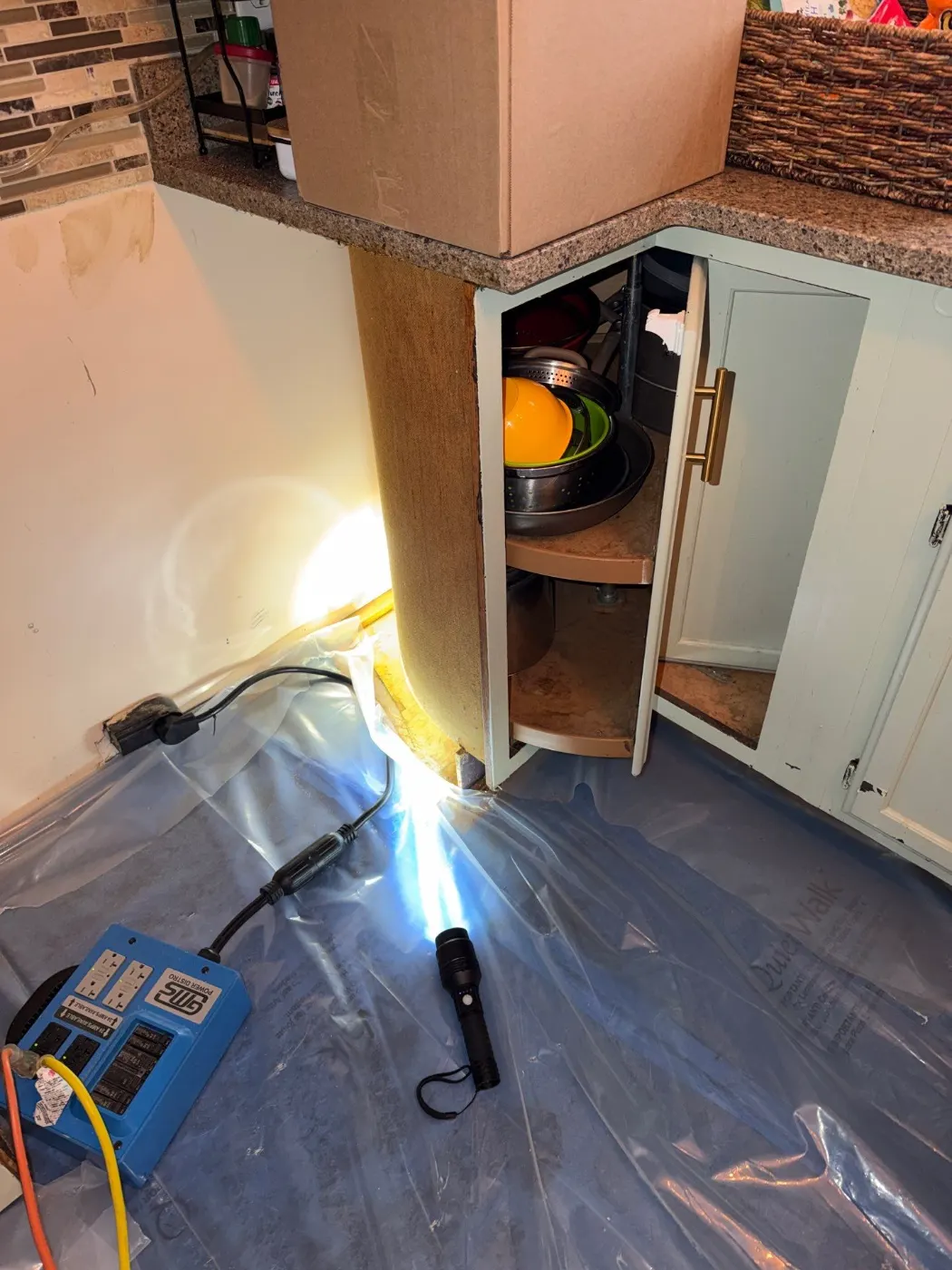
Kitchen water damage in Charlottesville runs on appliance schedules: dishwasher supply lines, refrigerator ice makers, and sink drains all fail eventually. Water under cabinets and beneath flooring hides until it warps. Fast extraction and cavity drying saves cabinetry that replacement would cost thousands to match.
Water finds subfloors, and subfloors decide flooring's fate. Extraction from carpet and pad, moisture checks beneath vinyl and laminate, and drilled cavity drying where needed keep Charlottesville floor systems intact. Skipping this step is how new flooring fails over old moisture.
A free water damage inspection answers the question every Charlottesville homeowner asks after the shock: how bad is it really? Moisture readings, photos, and a written scope, before any commitment, is how that answer should arrive. Pressure is not part of the process.
Payment Options That Work for You
Your Charlottesville Water Restoration project lead will walk you through every financing option during the assessment, and every term is in writing.
Pay for your project at a later time, but lock in today's pricing. Ideal for homeowners waiting on insurance settlements.
- No payments for 12 months
- No interest if paid in full
- Lock in current pricing today
Divide your project cost equally across 12 months with zero interest. Most homeowners choose this option for predictable budgeting.
- Equal monthly payments
- 0% interest for 12 months
- Simple, predictable budgeting
Spread your investment over up to 20 years with fixed equal payments. The right choice for larger projects or homeowners who prefer lower monthly amounts.
- Up to 20-year terms available
- Fixed equal payments
- Ideal for larger restoration projects
Subject to credit approval. Ask your project lead for current terms and promotions.
The Full Charlottesville Water Damage Restoration Menu
These are the water problems we answer calls for around Charlottesville, from basement flooding to sewage backups.
Water Damage Restoration in Charlottesville
Full residential water damage restoration in Charlottesville, from initial extraction and structural drying through reconstruction. Every phase performed to the IICRC S500 standard by certified technicians.
Learn moreBasement Flooding in Charlottesville
Basement flooding response for Charlottesville homes, including standing water extraction, dehumidification of below grade spaces, and repair of affected framing, flooring, and finished basement systems.
Learn moreSewage Cleanup in Charlottesville
Serving Charlottesville: category 3 sewage cleanup with full containment, PPE protocol, antimicrobial treatment, and safe disposal of contaminated materials per IICRC S500. Restoration follows once the space is decontaminated.
Learn moreStorm Damage in Charlottesville
In Charlottesville, storm driven water intrusion response including extraction, drying of saturated wall and ceiling assemblies, and reconstruction of damaged interior finishes after wind and rain events across Hancock County.
Learn moreCommercial Water Restoration in Charlottesville
Commercial water damage restoration for Charlottesville businesses, sized to the affected square footage with equipment and staffing to keep downtime and business interruption to a minimum.
Learn moreCommercial Flood Damage Cleanup in Charlottesville
Commercial flood damage cleanup for Charlottesville facilities, including large loss extraction, industrial dehumidification, content management, and coordination with property managers and insurance carriers.
Learn moreCommercial Sewage Cleanup in Charlottesville
Serving Charlottesville: commercial sewage cleanup with full biohazard containment, HEPA-filtered negative air, antimicrobial treatment, and documented decontamination per IICRC S500 protocols before any restoration begins.
Learn moreCommercial Mold Remediation in Charlottesville
For Charlottesville addresses, commercial mold remediation performed to the IICRC S520 standard, including containment, HEPA air filtration, controlled removal of contaminated materials, and post remediation verification.
Learn moreCommercial Storm Damage in Charlottesville
Commercial storm damage restoration for Charlottesville businesses, covering water intrusion response, structural drying, and reconstruction of interior finishes and building systems after severe weather.
Learn more
Local Expertise, Real Results
Restoration work done to the standard the industry actually publishes, not the shortcut version. That is the foundation of trust in Charlottesville.
Active water damage in your Charlottesville home is a call to Charlottesville Water Restoration at (765) 676-3491. 24 hour answering on active emergencies. Licensed crew dispatched within 2 hours in most cases. The crew lets you know on the phone if response will be longer. Documentation runs from first contact.
Charlottesville Water Restoration serves Charlottesville homeowners and property owners across the 46117 ZIP code, extending into Greenfield, Knightstown, New Palestine, Fortville, and the surrounding Hancock County communities. Founded in 2018 by Aaron Christy, who has been featured on FOX59, WISH TV, and RTV6, the company has spent years responding to water losses across central Indiana. Every job is led by IICRC certified technicians working on a licensed and insured crew (Indiana license RC21100059). Whether you are on a small residential street near U.S. Route 40 or on acreage further out toward Six Mile Creek, the same trained restoration crew is dispatched to your Charlottesville property.
Water damage restoration in Charlottesville is performed to the IICRC S500 standard, the industry reference document for water damage work, and any mold remediation follows the IICRC S520 protocol. That means every job begins with a moisture assessment using thermal imaging and penetrating meters, followed by controlled extraction, structural drying with monitored air movement and dehumidification, antimicrobial application when contamination is present, and post drying verification before any reconstruction starts. Nothing gets closed up until moisture readings match unaffected materials. The technical rigor is the reason repeat mold calls 30 days later stay rare.
Our Promise
Three commitments to every Charlottesville homeowner who calls Charlottesville Water Restoration. First, fast emergency response dispatched day or night, because every hour without extraction expands the damage. Second, IICRC certified technicians trained to the S500 standard on the truck, a licensed crew pulled off another job. Third, a free on site inspection before any work begins, with clear insurance coordination if you have an active claim so the scope matches your coverage.
Credentials and Follow Through in Charlottesville
Certified crews, thorough moisture mapping, and honest scope documentation on every Charlottesville water restoration job we take.
Around the Clock Response
Water damage in Charlottesville does not wait for business hours, and neither do we. Our 24/7 emergency line dispatches crews with extraction equipment already loaded, so mitigation starts on arrival rather than after a supply run. Fast response limits how far moisture wicks into subfloors and drywall, which directly limits your final repair bill.
IICRC S500 Trained Crews
Every restoration job runs to the IICRC S500 standard, the industry reference for water damage work. In practice that means proper Category classification, documented moisture readings, and structural drying calculations that determine equipment placement, not guesswork. You get technicians who know why each step exists, not just how to plug in a fan.
Mitigation Through Rebuild
Charlottesville homeowners work with one company from the first extraction pass through the final coat of paint. Drywall, flooring, trim, and cabinetry are handled after drying is verified, so there is no gap where your home sits half demolished waiting on a separate contractor to schedule. One project, one point of contact.
Insurance Documentation Done Right
We work with your insurance carrier and document the loss the way adjusters expect to see it. Photo and video evidence before mitigation begins, written moisture maps, category justification per S500, and scope aligned to your policy. Clean documentation is why claims process without the back and forth that stalls repairs.
Real Jobs. Real Results.
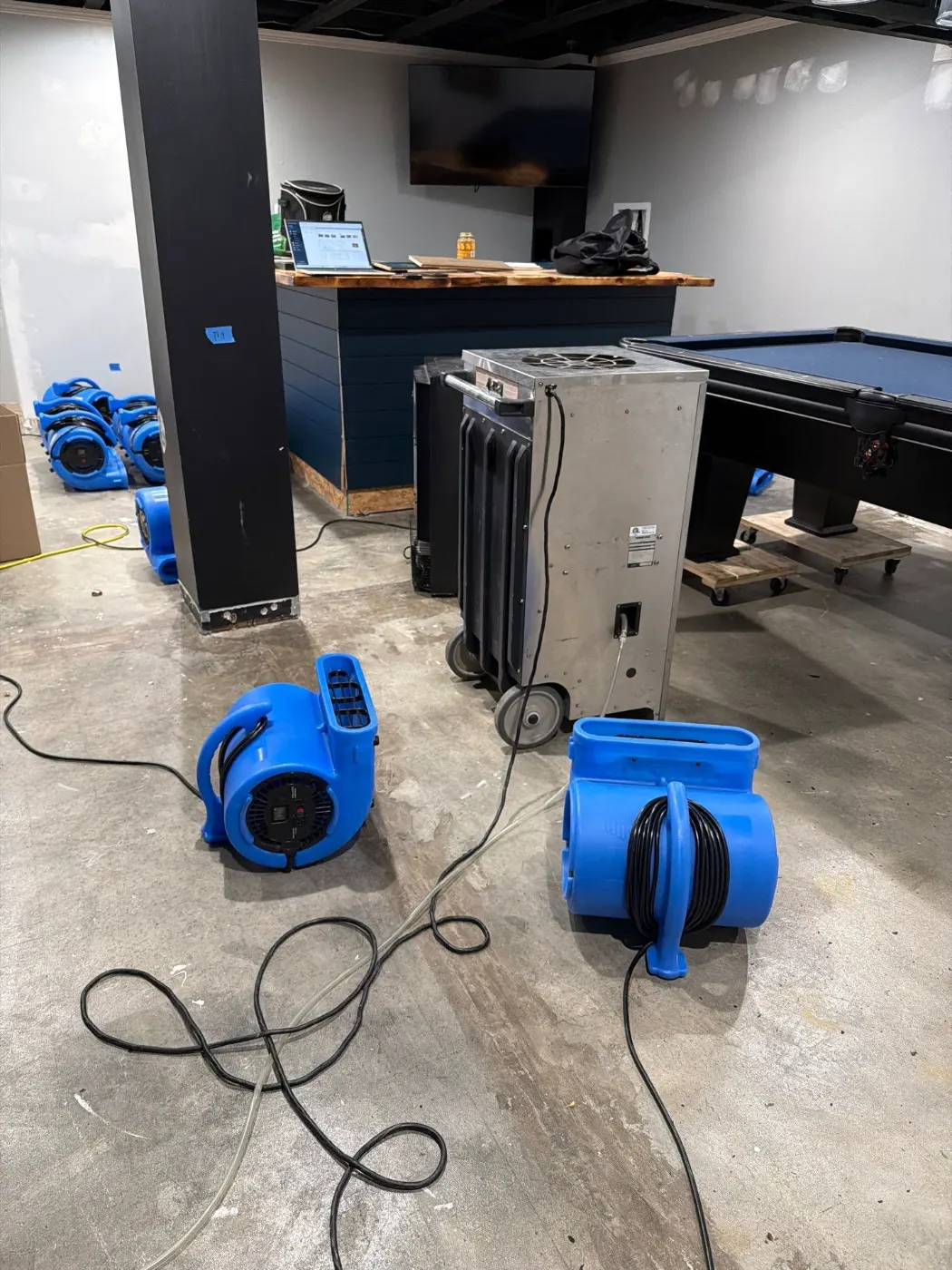
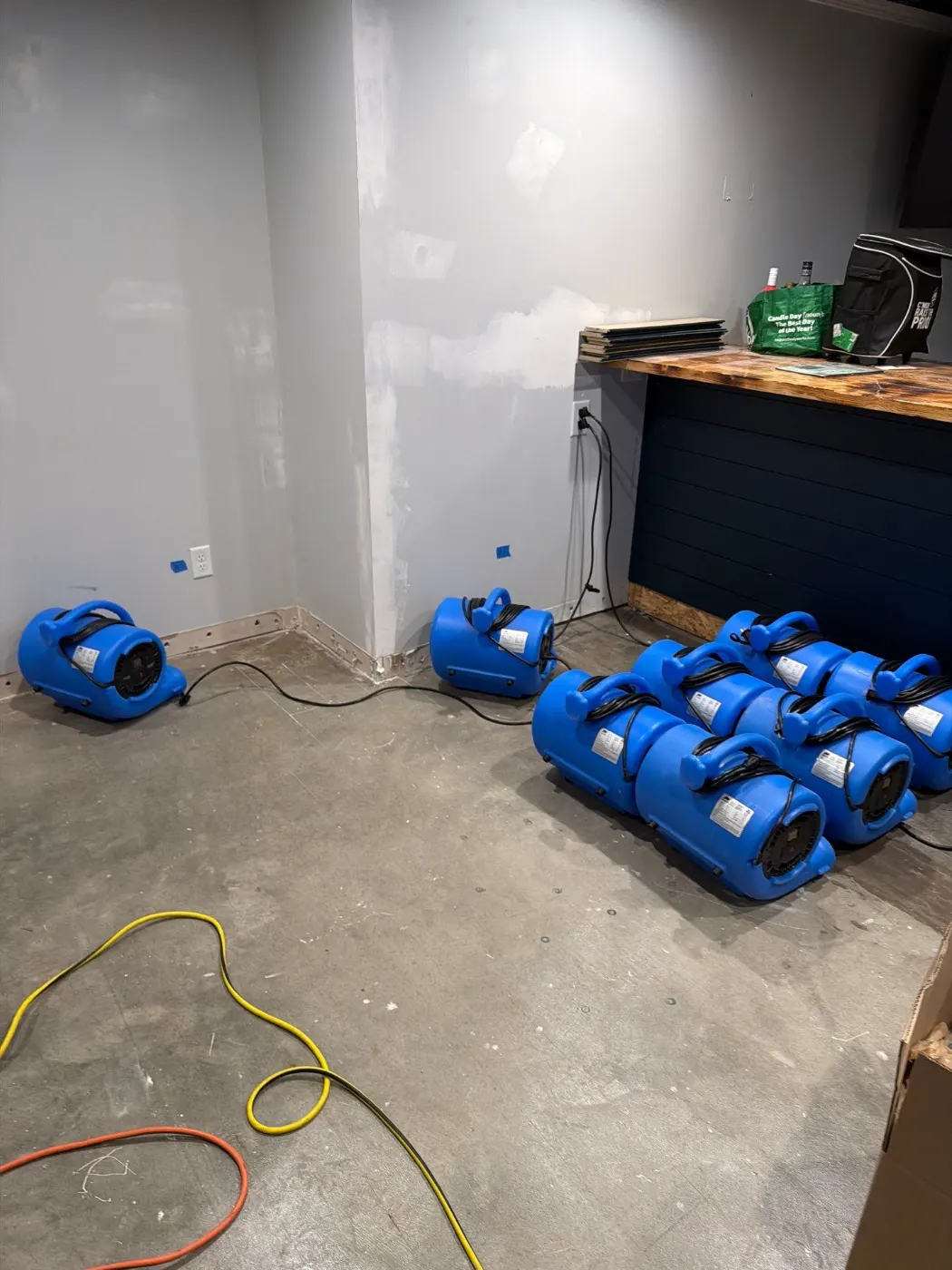
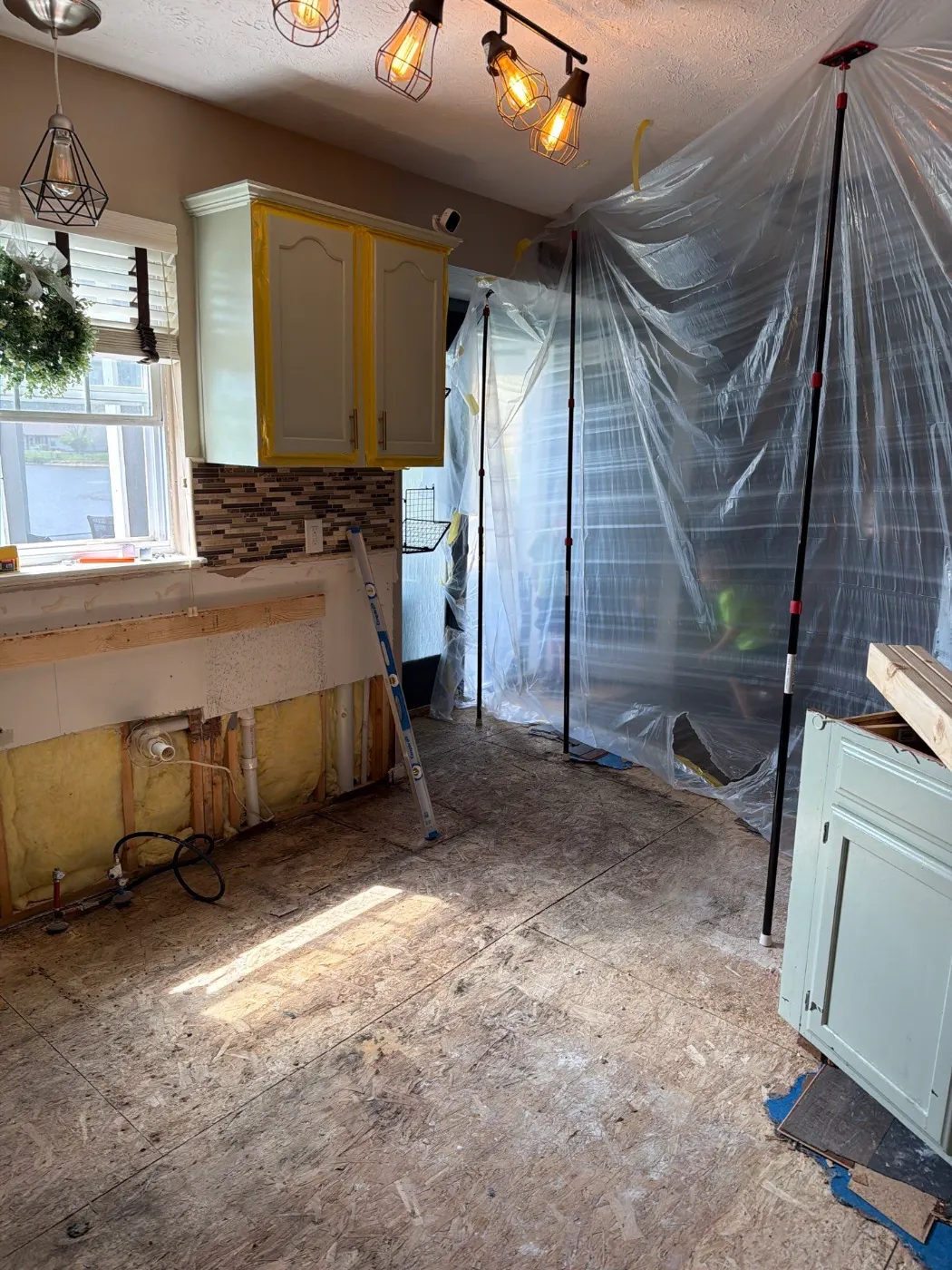
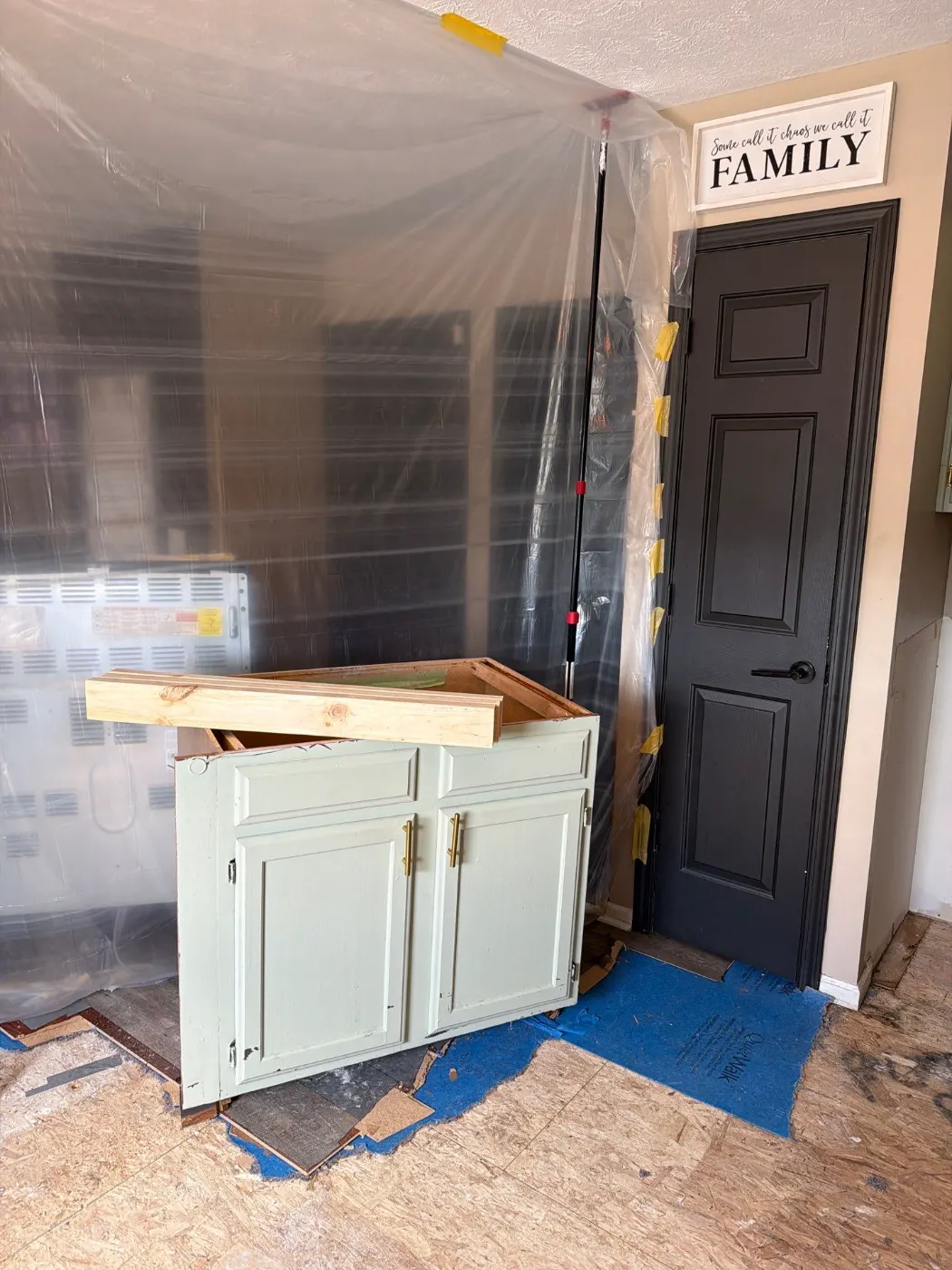
Recent water damage restoration projects across Charlottesville, Hancock County, and the surrounding communities. Real losses, real drying, real reconstruction, documented from first call through final walk through.
What Our Charlottesville Crews Do, and When
Every Charlottesville water damage call starts with an on site assessment, typically 1-2 hours depending on the size of the loss. Thermal imaging maps hidden moisture across walls, ceilings, and floors, penetrating meters confirm the readings, and the source is identified whether it is a broken supply line, appliance failure, sewage backup, or storm intrusion. Water is classified under IICRC S500 as Category 1 (clean supply water), Category 2 (gray water from dishwashers, washers, or clean toilet overflow), or Category 3 (sewage, floodwater, long standing groundwater). Scope is mapped before any drying equipment is placed.
Once the scope is set, insurance documentation begins. Every affected area is photographed and video logged before mitigation starts, moisture readings are recorded in a written map, and the affected materials are itemized. We contact your adjuster directly, walk through the scope, and justify each line of mitigation per industry standard so nothing gets denied for lack of evidence. Most Charlottesville homeowners never see the back end paperwork, we handle that side with your carrier while you focus on getting your household back in order.
Drying execution follows structural drying calculations, with commercial dehumidifiers and professional air movers placed based on the affected square footage and materials involved. Readings are logged daily and equipment is repositioned as materials release moisture, continuing until content matches unaffected reference points. Controlled demolition happens only where materials cannot be dried in place, then reconstruction begins: drywall, insulation, flooring, paint, and trim. The goal is a finished home, not a dry shell you have to hire someone else to close up.
Priority Emergency Dispatch
Call the 24/7 emergency line and a crew is dispatched with extraction gear, dehumidifiers, and air movers already on the truck. An IICRC certified technician leads the response so Category determination and drying setup happen on the first visit, not after a return trip.
Category Classification
Water is classified per IICRC S500 as Category 1, 2, or 3 based on source and contamination. Meter readings are logged, source documented, and the classification drives PPE requirements, containment level, and which materials can be dried versus removed. Nothing skipped, nothing assumed.
Insurance Coordination
We work with your insurance carrier for Charlottesville claims, providing photo documentation, moisture maps, and S500-aligned scope justification. Your adjuster gets what they need to approve mitigation without delay, and you get a clear scope in writing before work proceeds.
Verified Dry Standard
Structural drying continues with daily monitoring until moisture content in affected materials matches unaffected reference readings. No wall gets closed up on assumption. Reconstruction only starts once dry standard is confirmed, which is the single best defense against mold showing up 30 days later.
Most Common Causes of Water Damage in Charlottesville Homes
Vacant Property Freeze
Heat turned down to save money is the usual starting point. Set it too low, or lose a furnace with nobody there to notice, and the pipes in the exterior walls freeze on the first hard night. By the time a realtor opens the door, ceilings are on the floor.
Slab Leak Under the Floor
Water under a slab has to surface somewhere, and it comes up at the perimeter, at expansion joints, and through flooring adhesive. Carpet at the wall goes damp, wood cups, and the base of the drywall wicks it up from below.
Tub and Shower Pan Leaks
Tub surrounds leak at the spout penetration, at the valve escutcheon, and where the deck meets the wall. Any of the three puts water behind the surround, soaking framing and subfloor without ever running across the bathroom floor.
Frozen Pipe in an Exterior Wall
Any supply line run in an outside wall is one cold night from trouble. The insulation ends up behind the pipe instead of in front of it, the cavity drops below freezing, and the ice plug splits copper where nobody can see it.
Washing Machine Hose Burst
An overflow during a wash cycle puts detergent water into the structure, which reads as Category 2 under IICRC S500. That changes what gets dried and what gets removed, and it is the reason the water gets classified before equipment goes in.
Heavy Rain and Saturated Ground
Surface water is a grading problem before it is a plumbing one. A patio pitched toward the house, a downspout ending at the wall, or a flower bed built up above the siding line all deliver rain exactly where it should not go.
First Hour Checklist for Charlottesville Homeowners Facing Water Damage
In the first hour, close the main water valve if a pipe or appliance is leaking, and keep away from outlets and cords near the water. Then use the rest of this checklist to protect what you can while help is on the way.
1. Close the main valve first
Find the main shutoff and close it all the way. A round handle turns clockwise, and a lever handle turns so it sits across the pipe. If the valve won't move, your water utility can usually shut off service at the meter.
2. Stay clear of anything electrical
Stay out of any room where water has reached outlets or extension cords. If the breaker panel is dry and you can reach it without standing in water, switch off the breakers for the wet area. If you can't reach it safely, call your electric utility.
3. Protect yourself first
If you have to step into wet areas, wear rubber boots and gloves. Take the basement stairs slowly if they're wet, and leave the cleanup of any dirty water to the crew.
4. Get belongings off the floor
Lift loose items and boxes onto a table or a bed in a dry room. Storage bins with snap lids can wait a little longer, but open cardboard boxes should come out of the water first.
5. Keep stains off the carpet
Metal furniture feet can rust, and wood finishes can bleed into wet carpet. A square of foil or a plastic container lid under each leg keeps both off the carpet, and it takes only a few minutes to do.
6. Leave the record to us
You have enough to deal with in the first hour. Our crew documents the damage with photos and moisture readings as soon as we arrive, and we walk you through what we found once the work is underway.
7. Soak up clean water
If the water came from a supply line or the water heater, you can blot it with towels and mop the floor. A wet and dry shop vac works for clean water too. Leave any water from a sewer or a floor drain for the crew.
8. Have a few details ready
It helps to know roughly when the water started and whether it's clean water from a pipe or dirty water from a drain. If you're unsure about either one, the crew sorts it out on site.
Once the water is off and everyone is somewhere dry, call us and we'll get a crew headed to your Charlottesville home with the extraction and drying equipment on the truck.
Three Simple Steps
The work follows three steps, and the photo report keeps a record of each one.
Called In
Commercial pumps and drying equipment arrive on the first trip. Arriving fast is how a flood stays a repair. Call, describe the water, and a crew is dispatched within 2 hours.
The Paper Trail
Carriers approve what they can see, so they see all of it. Thermal cameras find the cold signatures that evaporating water leaves behind. No demolition happens before you see the readings.
Home Restored
Everything porous that cannot be saved comes out and gets documented. Your home goes back the way it was, and the file says so. Most Charlottesville dry-outs complete in 3 to 5 days with verified moisture readings before we leave.
How the Photo Report Works After Water Damage in Charlottesville
From the first walkthrough, our crew documents the damage with photos and moisture readings. That record becomes your photo report, and it's how you can see what's happening inside your home from your living room.
Where the water came from
The report starts at the source. If a supply line failed or a drain backed up, the crew photographs the part that failed and where it sits, so you know exactly what needs fixing before the water can come back.
How far the water traveled
Water moves under flooring and up into drywall farther than it looks from the doorway. The crew checks walls and floors with moisture meters, and the report marks which areas read wet and which read dry.
Your belongings, documented
Damaged contents get photographed where they were found, along with the rooms around them. If something can't be saved, the photo report shows its condition so you have a record of it.
What can dry where it is
Some materials can be dried right where they are, and some have to come out. The report shows which is which, with the readings behind each call, so you understand why a section of drywall or flooring is being removed.
Daily readings while it dries
While the equipment runs, the crew comes back to take new readings, and those go into the report too. You can follow the numbers as they drop and see which rooms are closest to finished.
We walk you through it
Once the first readings are in, we sit down with you and go through the report in plain language. You can see what's going on inside your walls from your living room and ask about anything that doesn't make sense.
Sharing the report
The report is yours to share with anyone you choose. We document damage with a photo report and walk you through what we found, so you can decide with your insurance company, and your own policy spells out what it covers.
Call us when you find water, and the photo report starts on our first visit to your home.
Questions Worth Asking Before Work Starts in Charlottesville
Clear answers to these questions make it easier to compare restoration companies in Charlottesville.
Does my policy require a certain company?
Ask your adjuster before you sign anything, and read the work authorization so you know what you're agreeing to.
What happens if you find mold?
Ask how mold behind walls or under floors gets handled, and whether that work is priced apart from the drying.
Who handles repairs after drying?
Ask who replaces drywall, flooring, paint and trim once the structure is dry, and whether one company can do both stages.
Who will be working in my home?
Ask whether the crew works for the company you called or for a subcontractor, and who's in charge on site each day.
How will you show me it's dry?
Ask for moisture readings on the first visit and the last one, so you can see the numbers reach dry standard.
Can I see an itemized estimate?
Ask for every line item in writing. Many insurers price water losses in Xactimate, so an estimate in that format is easier for an adjuster to review.
Indiana Weather Drives Restoration Calls Year Round
Charlottesville sits on flat, clay heavy central Indiana terrain that drains slowly after the heavy spring rains and summer thunderstorms that regularly trigger flood watches across Hancock and Rush counties. Winter brings its own risk, with freeze thaw cycles cracking supply lines in crawl spaces and exterior walls. Each season drives its own pattern of restoration calls.
Spring Saturation Flooding
Central Indiana springs bring extended rain events, and Charlottesville sits on flat, clay heavy terrain that drains slowly. Saturated soil pushes hydrostatic pressure against foundation walls, forcing water through cove joints, wall cracks, and around sump pump basins. When called in, we extract standing water, set drying equipment on affected framing and subflooring, and document the source for your claim.
Winter Pipe Bursts
Indiana freeze thaw cycles crack supply lines in crawl spaces, exterior walls, and unheated basements every winter. Older Charlottesville homes with original galvanized steel are especially vulnerable, and a burst overnight can dump hundreds of gallons before anyone notices. We isolate the affected area, extract, and begin structural drying the same day the loss is reported.
Severe Thunderstorm Intrusion
Hancock and Rush County thunderstorms drive wind and rain hard against siding, windows, and any compromised exterior penetration. Water finds its way into wall cavities, around window frames, and into attic spaces where it soaks insulation. We locate the intrusion path with thermal imaging, extract trapped water, and dry the affected assemblies before mold has a chance to establish.
Sump Pump and Sewer Backup
Because much of the Charlottesville area relies on private septic and individual sump pumps rather than municipal infrastructure, a failed pump or backed up line during heavy rain becomes a Category 3 water event. Full containment, PPE, and antimicrobial protocol apply. Contaminated materials are removed and disposed of per S500, then the space is decontaminated before drying.
Neighborhood Coverage in Charlottesville
The Charlottesville neighborhoods we cover, with notes on the homes in each one and where water usually gets in.
Where we respond near Charlottesville
If you're in Charlottesville or one of the towns closest to it, a crew can be on the way at any hour.
Water Damage Risk in Charlottesville
The conditions that decide how a Charlottesville job goes.
About Charlottesville Homes
Charlottesville was platted in 1830 along the National Road and its core residential streets date from the mid-1800s through the mid-20th century, with a modest number of postwar and late-20th century rural homes scattered along surrounding township roads. Homes from the 1800s through the 1940s likely contain original galvanized steel or early cast iron supply plumbing, while postwar construction from the 1950s through 1980s typically transitioned to copper, and newer rural builds on the outskirts may include PEX. The community is characterized by modest single family homes on a small grid of residential streets along U.S. Route 40, with low slung farmhouses and rural properties on surrounding acreage lots being common across the broader 46117 ZIP code. Given the age of the housing stock and central Indiana construction norms, full basements and crawl spaces are prevalent, with sump pump reliance common in older homes sitting on flat, clay heavy terrain.
Where We Work in Charlottesville
We cover homeowners across Charlottesville near Charlottesville Friends Church, Charlottesville Volunteer Fire Department, Charlottesville Worship Center, Eastern Hancock Elementary School, Eastern Hancock Middle School, Eastern Hancock High School, U.S. Route 40 (National Road), Six Mile Creek.
Surrounding Areas We Serve
Our crew also covers Greenfield, Knightstown, New Palestine, Morristown, Fortville, Henry.
Recent Weather Patterns
Hancock and Rush counties, which together contain Charlottesville, are officially documented as vulnerable to heavy rain, flash flooding, thunderstorms, tornadoes, and winter storms, with the National Weather Service in Indianapolis providing active coverage for the area. Flood watches have been issued for both Hancock and Rush counties in recent years, with excessive runoff identified as a recurring threat to rivers, creeks, streams, and low lying locations across the region.
What Our Crew Sees in Charlottesville
Charlottesville sits on flat central Indiana terrain along Six Mile Creek, and the area's clay heavy soils retain moisture and slow drainage, increasing the risk of basement seepage and crawl space saturation after heavy rain events that are common to Hancock and Rush counties. The community's housing stock spans nearly two centuries, meaning galvanized plumbing failures and aged drainage infrastructure are realistic concerns in older structures, while Indiana's pronounced freeze thaw cycles each winter create meaningful pipe burst risk in crawl spaces and exterior walls. Because the community is unincorporated and rural, properties often rely on private septic systems and individual sump pumps rather than municipal sewer infrastructure, making backup and pump failure events a distinct water damage risk for homeowners in the area.
The Charlottesville Area
Charlottesville is a very small unincorporated community with an estimated population of approximately 400 to 630 residents and roughly 223 households, reflecting a stable, owner occupied rural profile with about 86% homeownership. The median age skews older at around 60 years and the area falls within the broader Indianapolis-Carmel-Anderson metropolitan statistical area, with median household income data for the ZIP code area reported around $57,000 to $91,000 depending on the source and year.
The Three Phases of a Water Loss in Charlottesville
The equipment, the containment, and the rebuild, explained.
The emergency response phase for a Charlottesville water loss starts the moment the truck arrives. Commercial water extraction equipment pulls standing water off floors and out of carpet pad, commercial dehumidifiers sized to the affected square footage go into service, and professional air movers direct evaporation across wet materials. Moisture meters and thermal imaging map the full extent of the loss before drying targets are set. Extraction begins promptly on site with structural drying setup the same day, and readings are logged daily so equipment can be repositioned as materials release moisture. Work zones are contained with plastic where practical, unaffected areas are protected, and you get clear communication on what to expect each day. This phase covers most Category 1 and Category 2 losses in Charlottesville, from supply line breaks to washing machine overflows.
Specialized containment applies when the loss is Category 3 water (sewage backup, floodwater, or long stagnant water with biological load) or when full mold remediation is required per IICRC S520. Six mil plastic barriers are built floor to ceiling around the affected area, entry points are sealed, and negative air machines pull contained air through HEPA filtration before exhausting outside the work zone. Technicians work in Tyvek suits, N95 or P100 respirators as specified by S520, nitrile gloves, and eye protection. Contaminated porous materials (drywall, insulation, carpet pad) are cut, bagged, and disposed of, remaining structure is treated with antimicrobial, and post remediation verification with air sampling is performed when the situation warrants it. This is the phase where IICRC certification matters most, corner cutting here becomes a long term health issue.
Reconstruction closes the loop on a Charlottesville water loss. Drywall is hung, taped, mudded, sanded, primed, and painted to blend with unaffected areas. Flooring is replaced or refinished as needed, whether that is carpet and pad, vinyl plank, hardwood, or tile reset on backer. Trim and baseboards are reinstalled or replaced to match existing profiles, cabinetry is repaired or swapped, and doors are rehung. Electrical and plumbing finish work is coordinated so outlets, fixtures, and supply connections are back in service. Throughout the process you have one project manager, one schedule, and one point of contact from the initial emergency call through the final walk through. The goal is a home that looks like the loss never happened, not a shell handed off mid project to a general contractor you have to find and manage yourself.
What to Expect While Drying Equipment Runs in Your Charlottesville Home
You can usually keep living at home during a dry out. The equipment is loud and it runs day and night, but the crew sets it up so you can still use the rest of the house while the wet rooms dry.
Expect steady noise
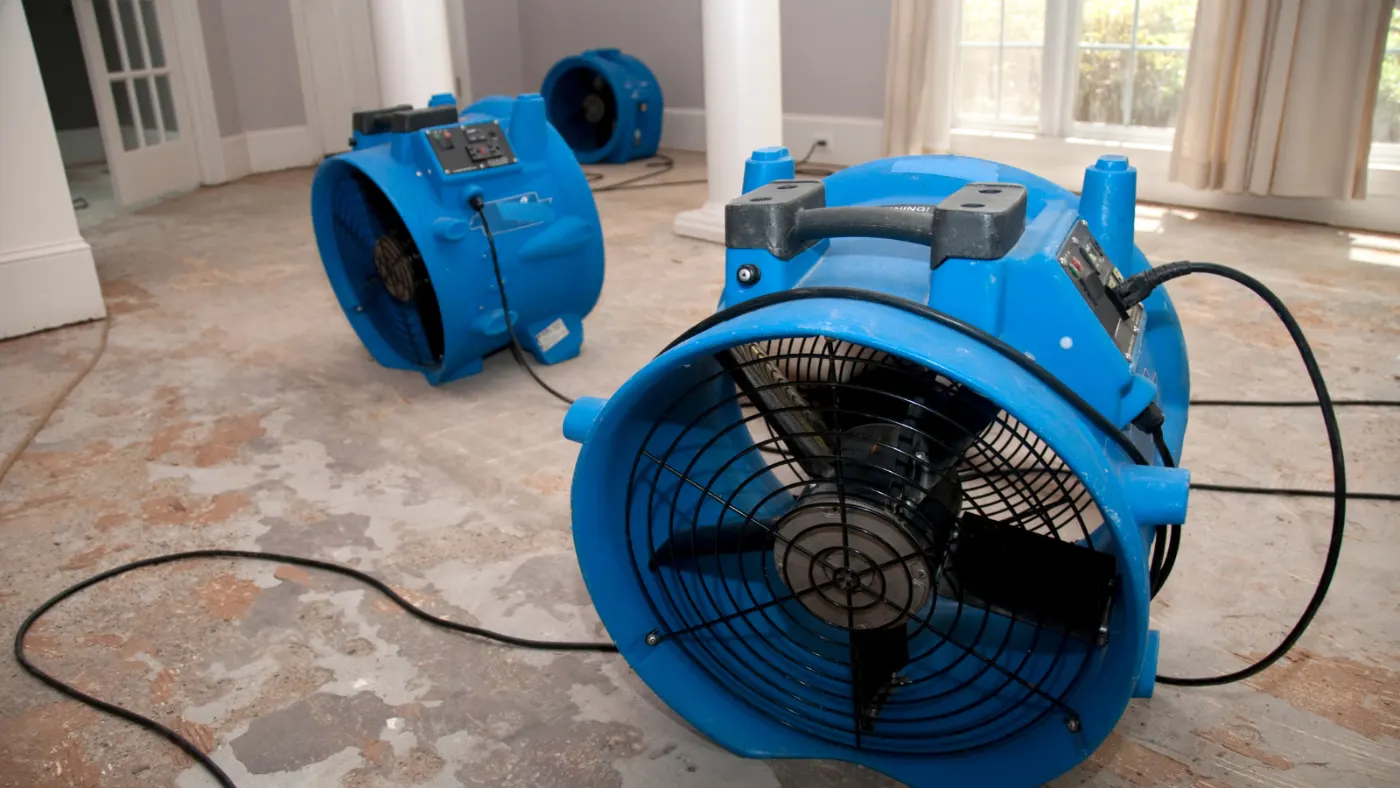
Air movers sound like strong box fans, and dehumidifiers add a low hum. A closed door between a bedroom and the equipment helps at night, and the crew can sometimes angle a unit away from a bedroom wall if the noise carries.
Leave the settings to the crew
Most units have their own switch or a small control panel. The crew sets those for your rooms, so leave them as they are and let the crew make changes on their next visit.
Keep windows closed
Open windows let humid outdoor air in, and the dehumidifiers then have to dry that air too. Keep the windows shut in the rooms being dried until the crew tells you to open them.
Keep cords clear
Cords run along the floor between the outlets and the equipment. Leave them where the crew routed them, and keep rugs and furniture off the cords so they stay cool and easy to see.
Pets and drying rooms
Pets tend to be curious about the noise and the warm air, so keep them out of the drying rooms when you can. A gate across the doorway works if a door has to stay open.
What the daily check covers
On each visit the crew takes new moisture readings in the same spots as before and moves or removes equipment based on what the numbers show. Those readings go into your photo report, so you can see the change from one day to the next.
Why the drying starts right away
EPA says it's important to dry water damaged areas and items within 24 to 48 hours to prevent mold growth. That's why the crew sets up drying equipment on the first visit and checks it each day after.
The last day of drying
On the final visit, the crew takes one more set of readings to confirm the wet areas are dry. Then the equipment comes out and the rooms are ready for any repairs they need.
Call us with any question about the equipment, and we'll help you sort it out over the phone or on the next visit.
Charlottesville water damage pricing
Mitigation ranges for Charlottesville. Insurance covers most claims.
Charlottesville Water Restoration Questions
These are the questions Charlottesville homeowners bring up most when they call us about water.
Expert Charlottesville Restoration Crews Available Now
Water is spreading through your Charlottesville home right now and every hour it sits expands the damage into more subfloor, drywall, and insulation. Call Charlottesville Water Restoration for fast emergency dispatch, a free on site inspection with no obligation, and full coordination with your insurance carrier.