Sewage Cleanup in Charlottesville, IN
Sewage backup cleanup for Charlottesville homes, with containment and drying documented in a photo report you keep.
Charlottesville Water Restoration provides Sewage Cleanup in Charlottesville, IN. 24/7 emergency response with IICRC certified crews, and we work with your insurance carrier on approved claims. Call (317) 653-6821 for immediate dispatch.
- Service: Sewage Cleanup for Charlottesville homeowners
- Service area: Charlottesville, IN and surrounding areas
- Response time: 24/7 answering with priority emergency dispatch across Charlottesville
- Licensed and insured (License #RC21100059)
- Serving Charlottesville, IN since 2018
Sewage Backup Cleanup in Charlottesville
We clean up sewage backups in homes across Charlottesville, and we'll disinfect whatever can stay.
When Backups Happen
Some homes around Charlottesville are on septic systems, and a failing system can back up into the house.
We work in every corner of Charlottesville, including Eastern Hancock School District Residential Area and the blocks around Charlottesville Worship Center and Eastern Hancock Elementary School. Nearby, we handle sewage backups in New Palestine, Knightstown, Greenfield and Henry.
Expert Sewage Cleanup for Charlottesville Homeowners
Damp building materials can start growing mold within 24 to 48 hours, according to EPA guidance, and a sewage backup leaves carpet pad and drywall soaked at once. The sooner those materials leave your Charlottesville home, the less has to be dried and the less likely mold work gets added to the job. Charlottesville Water Restoration plans the removal around that clock.
Deciding what can be cleaned and what has to go takes most of the judgment on a sewage backup. Charlottesville Water Restoration removes the porous materials the sewage soaked into, like carpet pad, drywall and insulation, and cleans and treats the hard surfaces that stay. The crew photographs every cut line and every bag that leaves your Charlottesville home, so you can see why each item went.
Charlottesville Water Restoration tells you up front which part of your Charlottesville home stays usable while the work runs. Containment and negative air are what make that possible, and the crew keeps its entry on the route with the least traffic through clean space. Technicians wear respirators and disposable suits inside the work zone and change out at the entry, so contamination doesn't ride into the rest of the house on a bootprint.
Your own photos help as much as anyone's. Before the Charlottesville Water Restoration crew touches anything in your Charlottesville home, take wide shots of each affected room and close ups of the source and the water line on the walls. Put a tape measure in the frame to show how high the water reached, and photograph belongings that are sitting in it.
Sewage backups happen at 2am and on holidays, and Charlottesville Water Restoration takes calls any time, day or night. Phone (317) 653-6821 from your Charlottesville home and describe what you're seeing, and the person on the line will tell you what to do while you wait for the crew.
Signs You Need Sewage Cleanup
If you notice any of these in your Charlottesville home, schedule a free inspection before the issue worsens.
Brown drips falling from a ceiling light fixture beneath an upstairs bathroom after an overflow
An upholstered chair or mattress in the basement wet at the legs after a backup
Dark gritty water standing around the floor drain with paper debris floating in it
Ejector pit alarm sounding, or the pump cycling while the water level stays up
A line of unusually green, soft grass running across the yard above the sewer lateral
Hardwood boards cupping just outside a bathroom where waste from the toilet ran across the floor
Neighbors on the same street reporting sewer backups on the same day as yours
Kitchen sink filling with dark water when the dishwasher drains
Sewage odor in the basement that gets stronger after a load of laundry or a long shower
Toilet water rising in the bowl when someone runs the kitchen sink
How Charlottesville Water Restoration Handles Sewage Cleanup
We follow these steps in order on every Charlottesville job.
Sewage Assessment
Every affected room gets walked with thermal imaging and penetrating moisture meters. The source gets photographed, and the affected square footage gets mapped and logged before any material comes out of the house.
Protective Gear and Zones
The crew suits up at the edge of the work area with disposable coveralls, gloves, boots and respirators, and marks the line between the work zone and the clean side. Gear comes off at that line and goes into bags.
Contents Sorting
Belongings in the room get sorted before the removal work starts. Anything the water reached is photographed and listed before it goes into bags, and hard goods that can be cleaned are set aside for separate cleaning.
Hard Surface Decontamination
Exposed framing, subfloor, slab and joists get scrubbed and rinsed, and the rinse water gets extracted. An EPA registered antimicrobial goes on once the surfaces are clean and stays wet for the dwell time printed on the product label.
Clearance Verification
Final moisture readings go on every affected material against an unaffected baseline elsewhere in the house. Cleaned surfaces get inspected, the sealed space gets an odor check with the scrubbers off, and containment comes down once the verification is written up.
Sewage Cleanup in Charlottesville
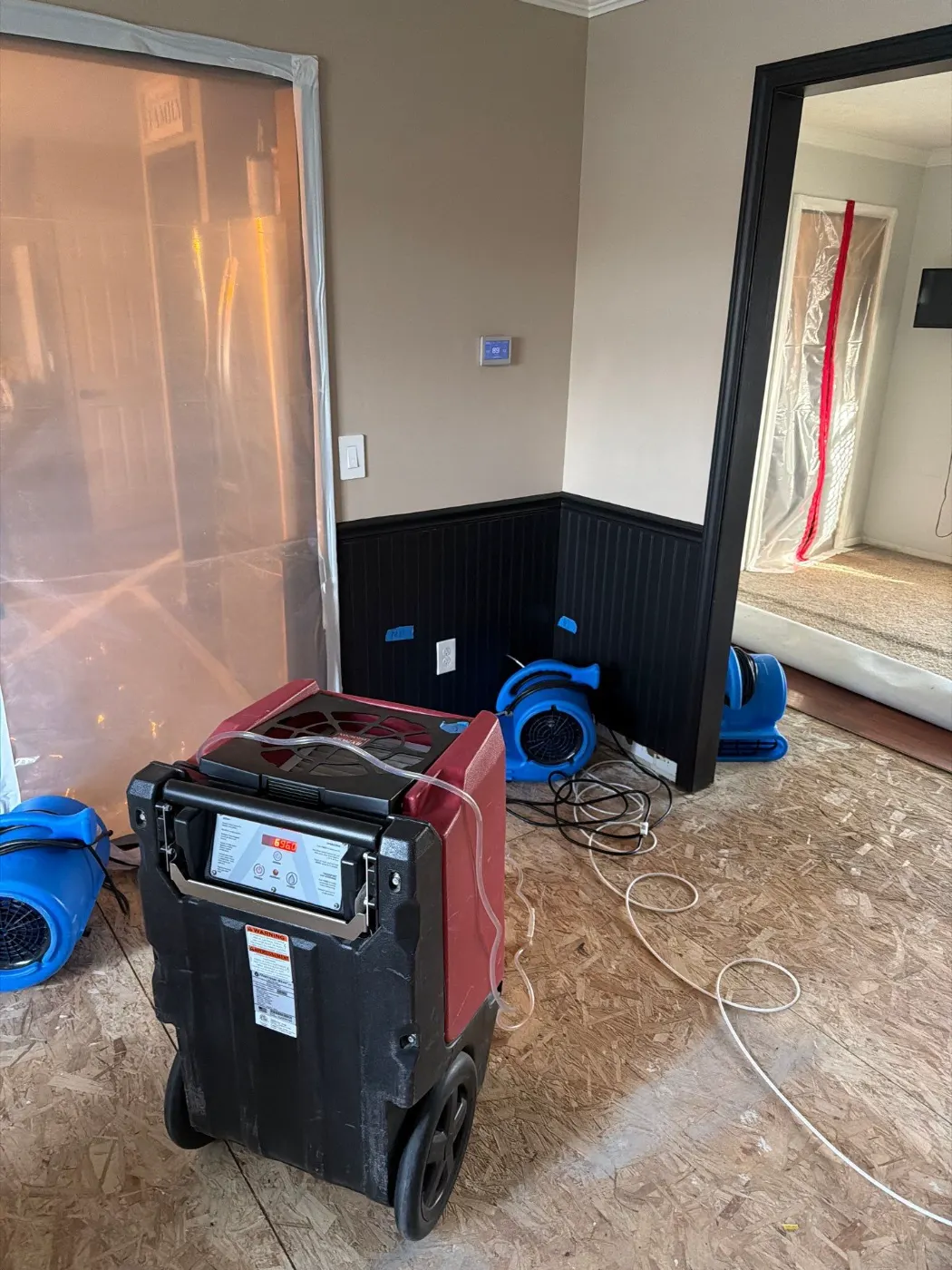
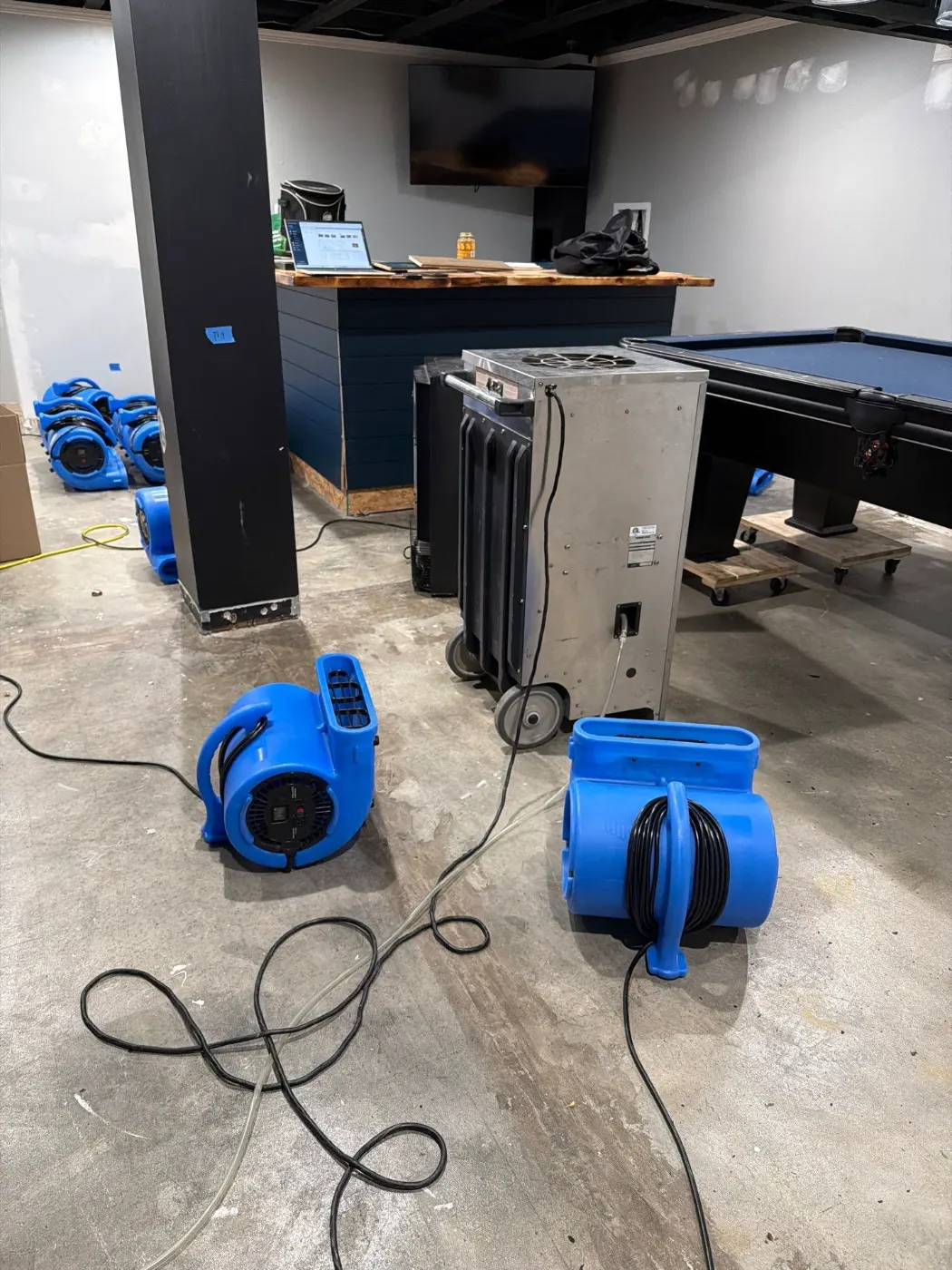
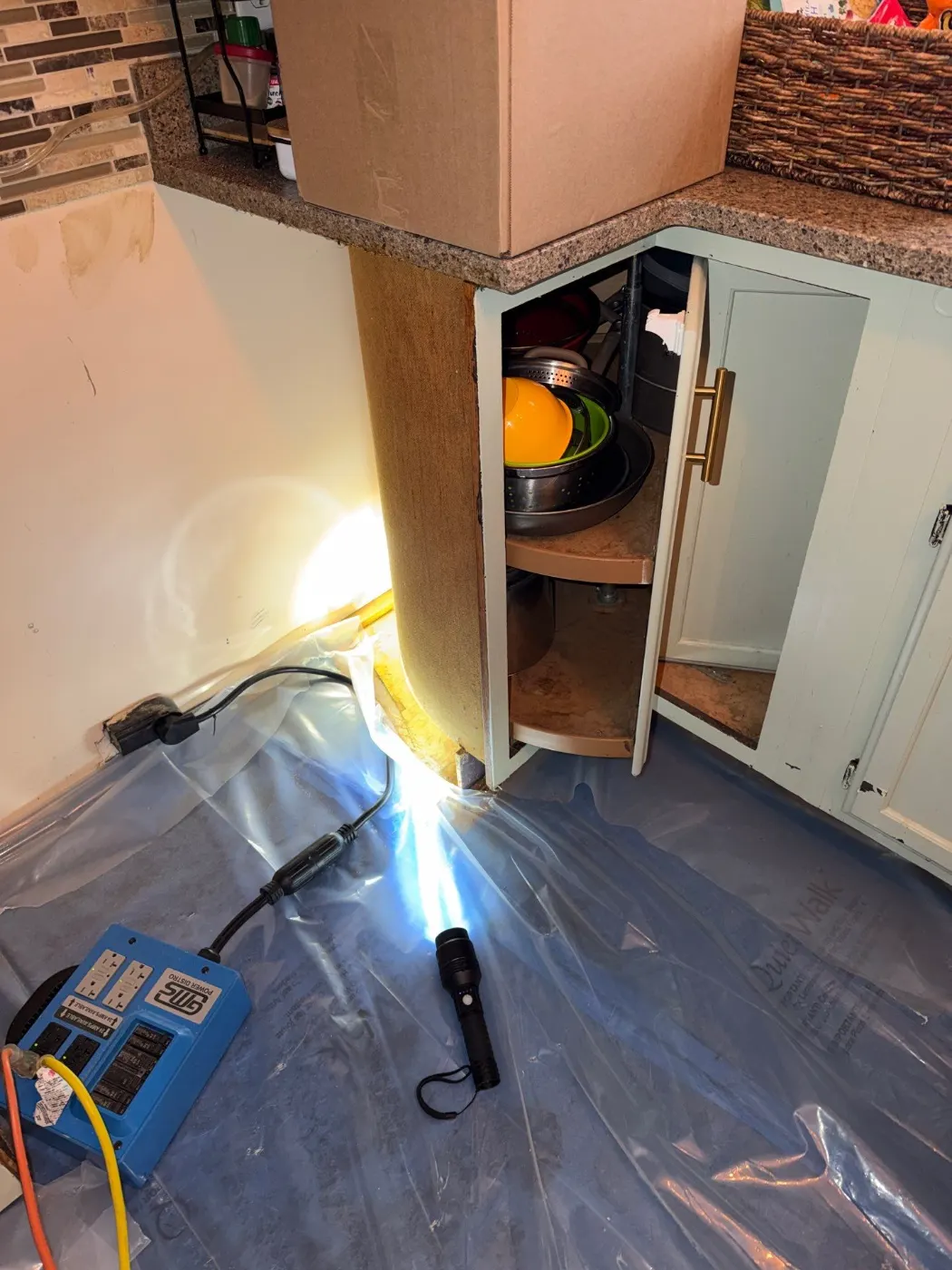
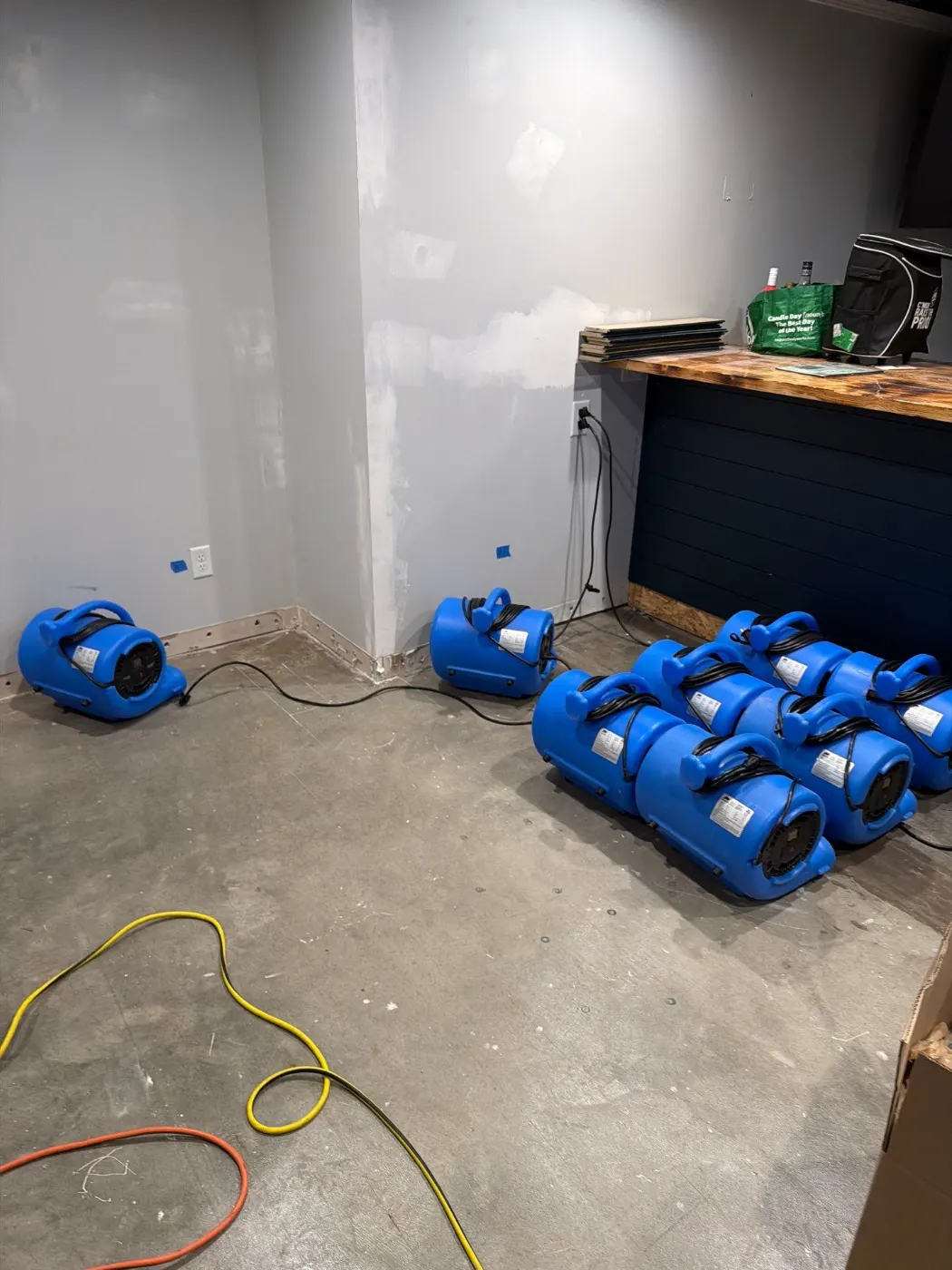
Photographs from real sewage cleanup jobs completed by our crew in Charlottesville and surrounding areas.
Sewage Cleanup FAQ
Questions Charlottesville homeowners ask us about sewage cleanup.
Guidance and Standards for Sewage Cleanup
- The ANSI/IICRC S500 is the published standard for professional water damage restoration. The current edition is the Fifth Edition, 2021. IICRC S500 Standard
- The Indiana Department of Insurance advises against permanent repairs before your insurance company inspects the damage. Check your own policy for what it covers. Indiana Department of Insurance: Insurance Claim Tips
Charlottesville Neighborhoods We Serve
We take sewage cleanup calls in every part of Charlottesville. Pick your neighborhood for local details.
- Original Platted Village Core (West Street and East Street grid)
- National Road (U.S. Route 40) Corridor
- Jackson Township Rural Parcels (Hancock County side)
- Ripley Township Rural Parcels (Rush County side)
- Eastern Hancock School District Residential Area (East 250 North corridor)
- Henry and Cleveland Vicinity (Jackson Township west edge)
Other Restoration Services in Charlottesville
Charlottesville Water Restoration handles the full scope of restoration work. Explore our other services below.
Water Damage Restoration in Charlottesville
24/7 emergency response. IICRC certified water restoration from extraction to full dry out.
Learn more →Basement Flooding in Charlottesville
Basement water emergencies handled fast. Extraction, drying, mold prevention.
Learn more →Storm Damage in Charlottesville
Storm related water emergencies. Tarping, extraction, drying, and full restoration.
Learn more →Request Sewage Cleanup
Reach Us Directly
Our team is available 24/7 for emergencies and ready to schedule inspections during business hours.
Need Immediate Help?
For active water or mold emergencies, call us directly. We are available 24/7.