Commercial Storm Damage in Charlottesville, IN
Low slope roof failures and the floors below them. Charlottesville Water Restoration dries Charlottesville commercial buildings while the tenants keep working.
When Charlottesville homeowners need Commercial Storm Damage, Charlottesville Water Restoration responds 24/7 with certified technicians, fast equipment deployment, and claim ready documentation. Call (317) 653-6821 for immediate dispatch.
- Service: Commercial Storm Damage for Charlottesville homeowners
- Service area: Charlottesville, IN and surrounding areas
- Response time: 24/7 answering with priority emergency dispatch across Charlottesville
- Licensed and insured (License #RC21100059)
- Serving Charlottesville, IN since 2018
Commercial Storm Damage for Charlottesville Businesses
You're the one who has to tell ownership what happened and what it will cost, and right now you've got a wet floor plate and a roof you can't see from the ground. Charlottesville Water Restoration handles commercial storm intrusion across central Indiana with crews that document a loss the way a carrier's consultant will want to read it. Charlottesville Water Restoration dispatches to Charlottesville, IN within two hours, and the moisture log starts the day the water does.
An occupied building can keep running through a storm loss when the containment is built at the right line. Charlottesville Water Restoration sets barriers at a demountable partition or a corridor wall, so one wet bay doesn't close a whole floor in your Charlottesville building. Negative air with HEPA filtration runs where materials are coming out, and egress paths stay clear.
Above a suspended ceiling is where most commercial storm water ends up sitting. Charlottesville Water Restoration crews pull the wet lay in tile, bag the saturated batt or blanket insulation, and get air moving across the deck and the underside of the structure. Readings come off the gypsum and the deck itself, because dry tile over a wet deck just moves the problem a month out.
Carriers want to know what failed and when. Charlottesville Water Restoration photographs the roof condition at the breach, the path the water took, and the interior it reached, then dates all of it. On a loss in Charlottesville that record is what separates storm damage from a long term condition in the adjuster's read, and it gets built on the first visit while the evidence is still there to photograph.
Charlottesville Water Restoration dispatches to commercial water intrusion in Charlottesville, day or night, weekend or holiday. The crew stops the water, dries the structure, and puts the ceiling and the insulation back when the readings allow it. Call and the team will walk the building with you.
Signs You Need Commercial Storm Damage Restoration
If you notice any of these in your Charlottesville building, schedule a free inspection before the issue worsens.
Water tracking under the seals of overhead dock doors and pooling in the leveler pit
Standing water ponding on the roof more than two days after the rain stopped
Light fixtures out in one zone of the ceiling grid after a storm, with the breaker holding
A musty, earthy smell at a return air plenum or coming out of a corridor diffuser
Damp, darkened flooring in a band just inside the main entrance after a windy rain
A supply diffuser dripping water or showing rust streaks after a storm
Grout between floor tiles darkening in a pattern that spreads a little more each day
Raised access floor panels that feel damp, with water showing beneath them in a telecom room
Leak sensors or pit alarms going off in a mechanical room or IT closet during a storm
Roof drain piping dripping at a joint inside a chase or above the ceiling
How Charlottesville Water Restoration Handles Commercial Storm Damage
We follow these steps in order on every Charlottesville job.
Emergency Roof Dry in
The membrane breach or failed detail gets covered with a temporary dry in built to hold through the next rain. Photos go in the file before and after. The permanent repair stays on the work order until a roofing scope takes it over.
Contents and Inventory Protection
Stock and equipment on wet floors get lifted onto blocking or moved to dry ground, with plastic over anything that has to stay. A photo list records what moved and where, which supports each tenant's own claim.
Water Category Call
Rain that started clean can worsen in category as it sits, so the crew classifies the water as it entered and again as it has aged. That call sets which materials get cleaned in place and which come out.
Equipment Out and Space Release
As each area reaches its dry goal, the equipment comes out of it and the space goes back to the tenant. The release date and final readings for every area go in the file.
Closeout File and Walkthrough
A walkthrough with the property manager closes the job, and the crew hands over one organized file with the photos, the readings, the equipment run hours and the scope. Ownership and the carrier's reviewer can read it start to finish.
Commercial Storm Damage in Charlottesville
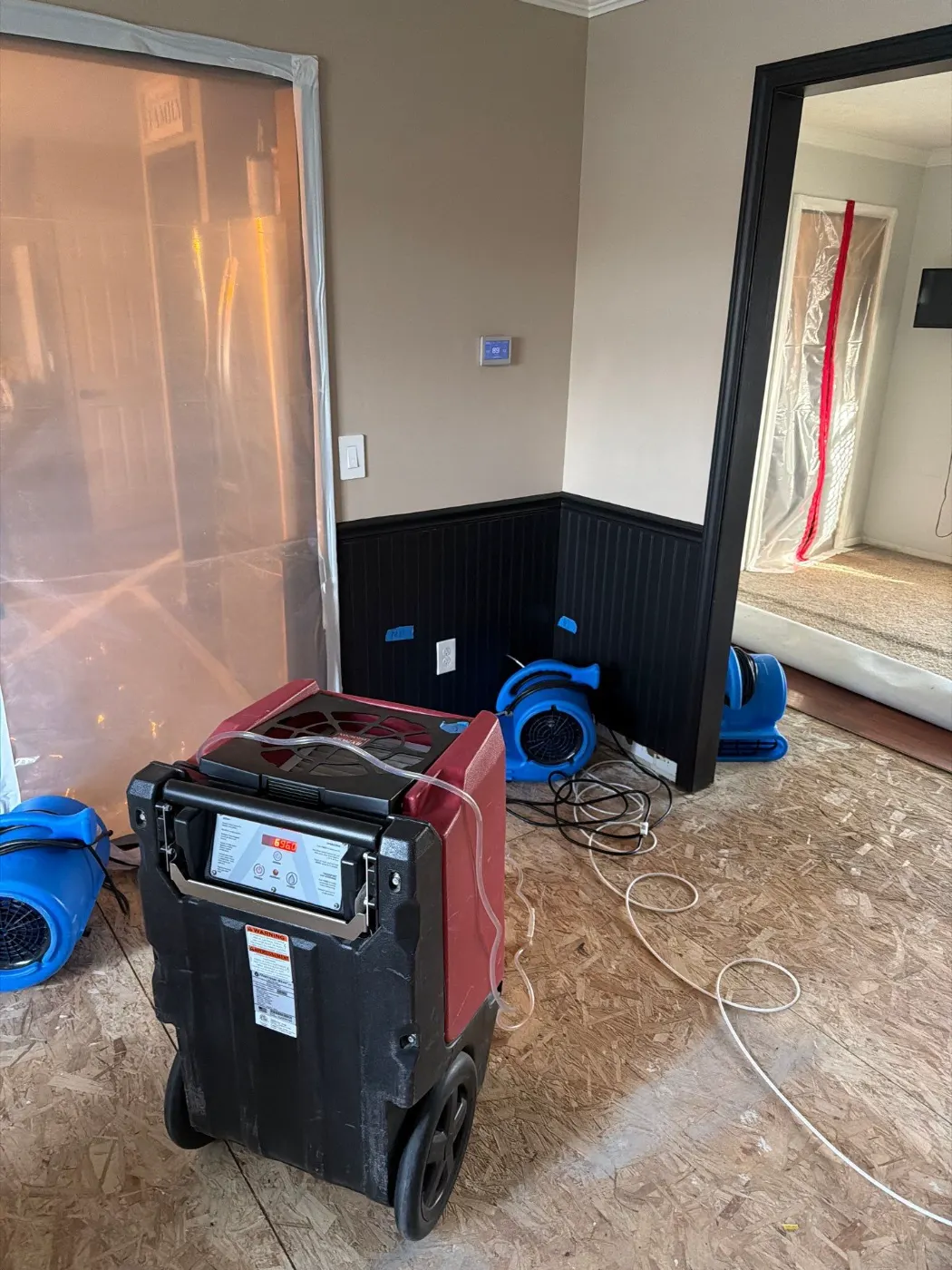
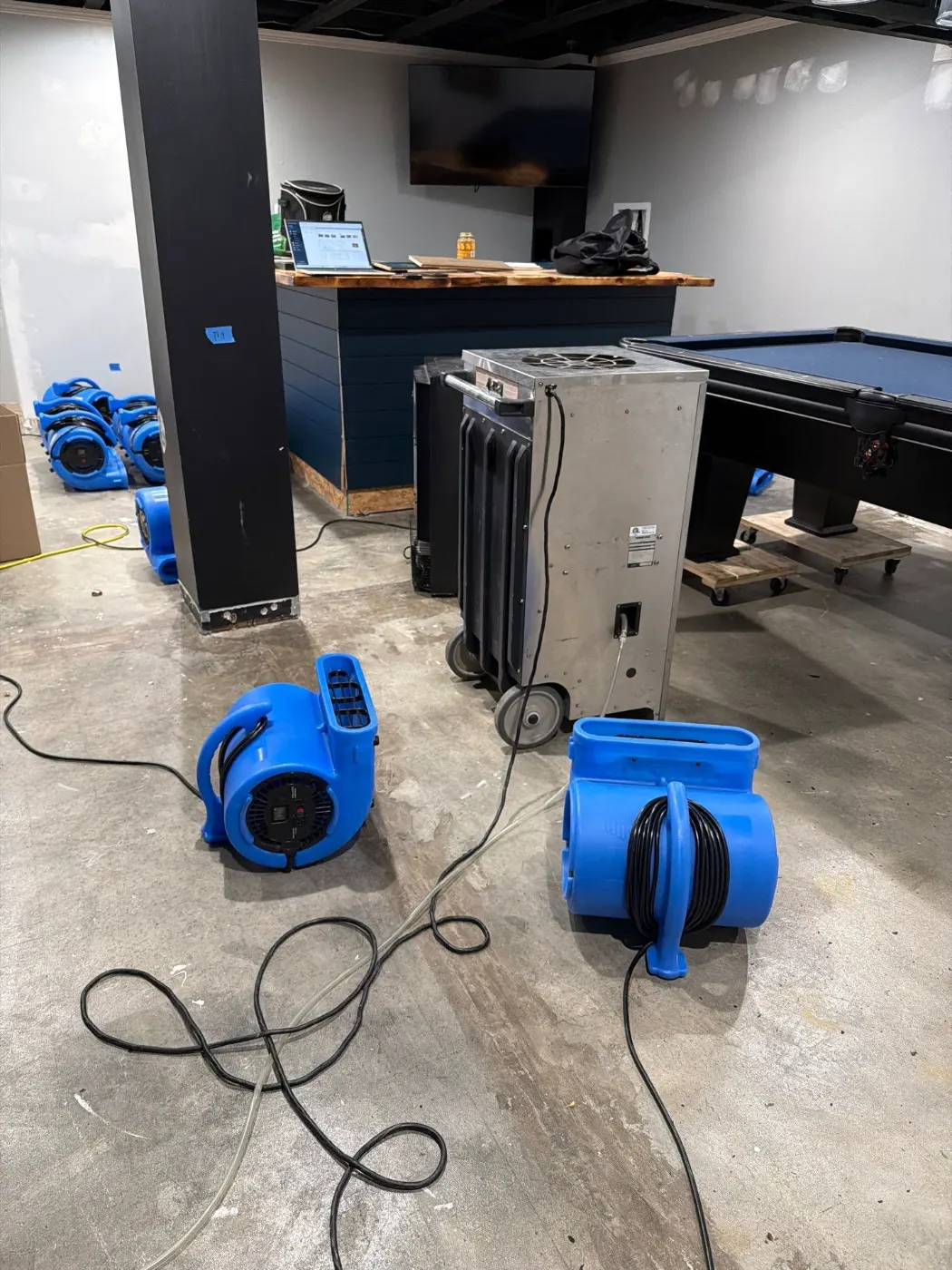
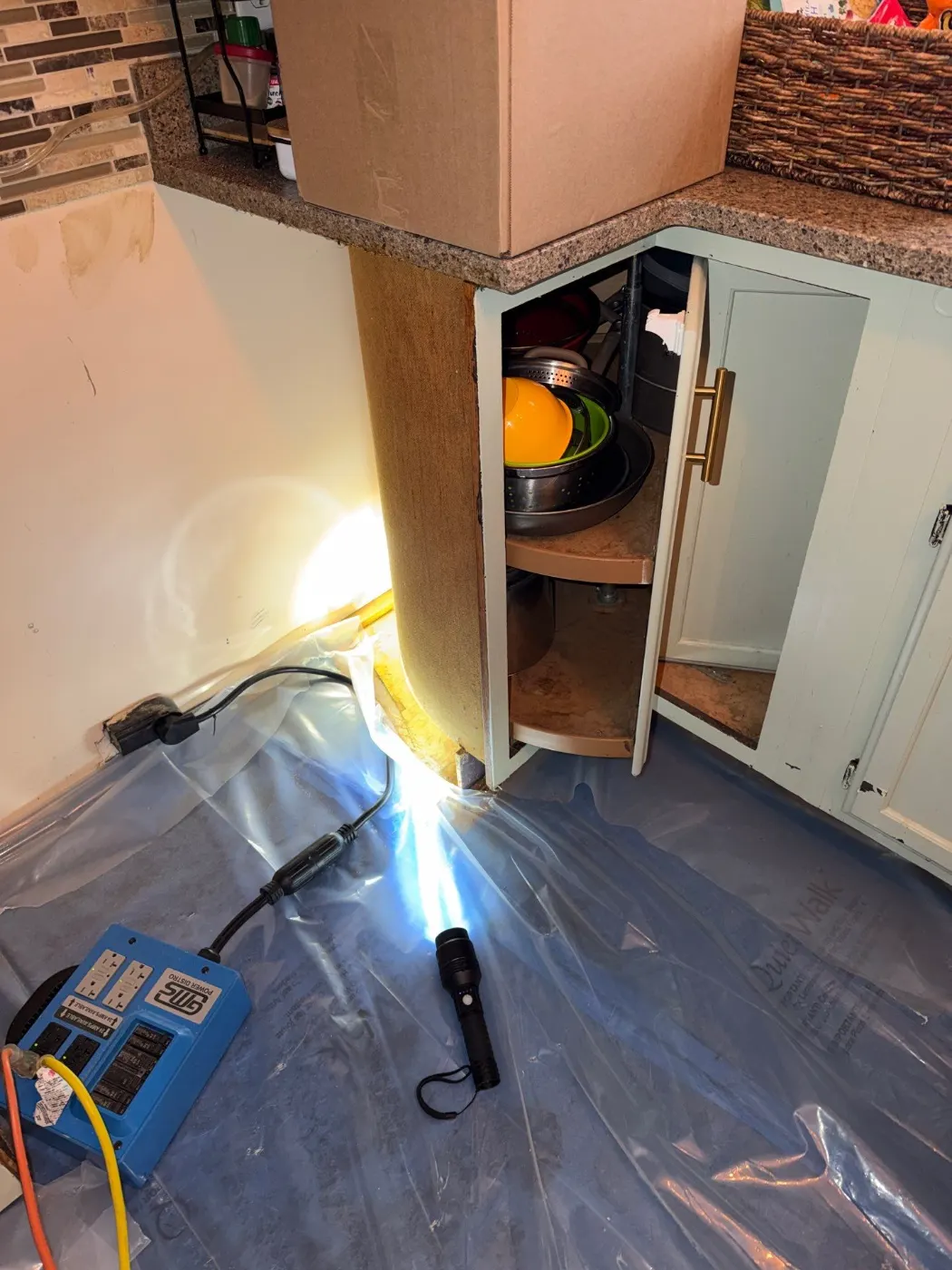
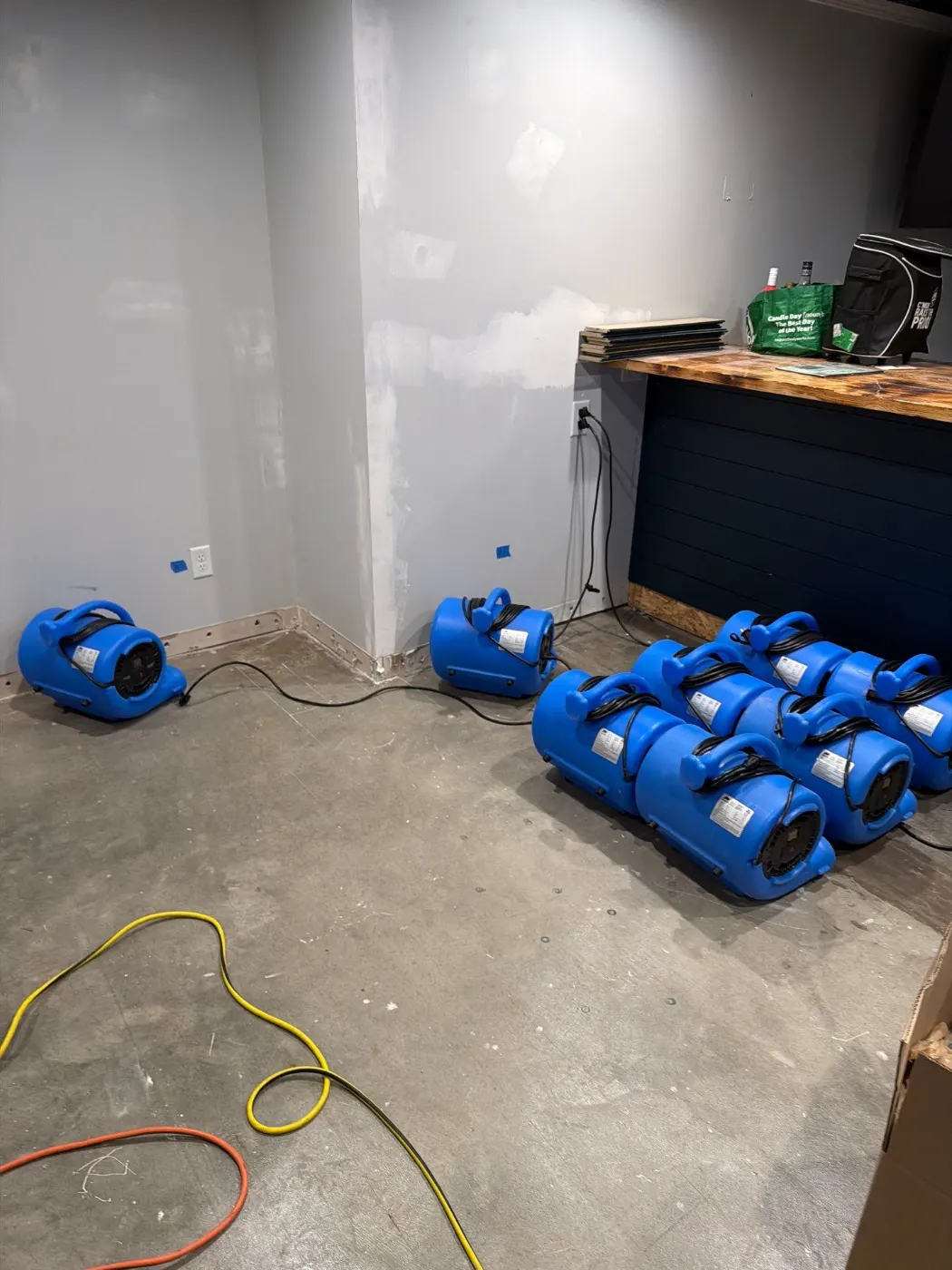
Photographs from real commercial storm damage jobs completed by our crew in Charlottesville and surrounding areas.
Commercial Storm Damage FAQ
Questions Charlottesville property managers ask us about commercial storm damage restoration.
Guidance and Standards for Commercial Storm Damage
- The National Weather Service office in Indianapolis posts summaries of recent central Indiana storm and flood events. NWS Indianapolis Event Summaries
- The ANSI/IICRC S500 is the published standard for professional water damage restoration. The current edition is the Fifth Edition, 2021. IICRC S500 Standard
Charlottesville Neighborhoods We Serve
We take commercial storm damage calls in every part of Charlottesville. Pick your neighborhood for local details.
- Original Platted Village Core (West Street and East Street grid)
- National Road (U.S. Route 40) Corridor
- Jackson Township Rural Parcels (Hancock County side)
- Ripley Township Rural Parcels (Rush County side)
- Eastern Hancock School District Residential Area (East 250 North corridor)
- Henry and Cleveland Vicinity (Jackson Township west edge)
Other Restoration Services in Charlottesville
Charlottesville Water Restoration handles the full scope of restoration work. Explore our other services below.
Water Damage Restoration in Charlottesville
24/7 emergency response. IICRC certified water restoration from extraction to full dry out.
Learn more →Basement Flooding in Charlottesville
Basement water emergencies handled fast. Extraction, drying, mold prevention.
Learn more →Sewage Cleanup in Charlottesville
Category 3 biohazard cleanup. Full containment, decontamination, structural restoration.
Learn more →Request Commercial Storm Damage Restoration
Reach Us Directly
Our team is available 24/7 for emergencies and ready to schedule inspections during business hours.
Need Immediate Help?
For active water or mold emergencies, call us directly. We are available 24/7.